
Marlite Products
Marlite products are fiberglass reinforced plastic (FRP) wall panels, from plain pebbled sheets to subway tile patterns, made to give kitchens, restrooms, classrooms and corridors a tough wall that cleans up fast.
3 results
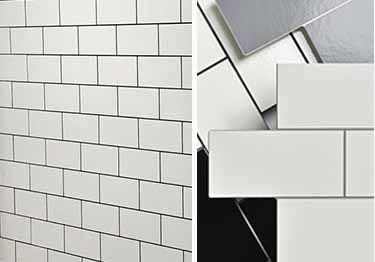
Subway Tile FRP Sheets by Marlite Symmetrix-A390

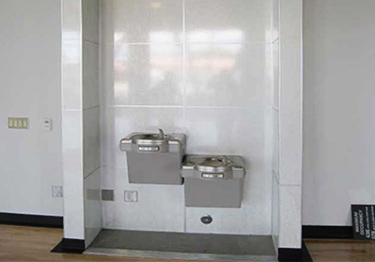
FRP Fiberglass Reinforced Sheets | Pebble Design by Marlite-A392
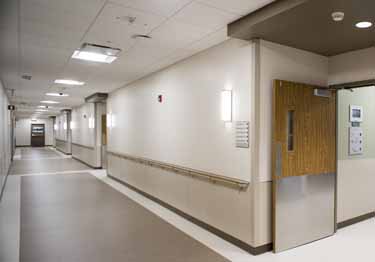
FRP Fiberglass Reinforced Sheets | Smooth Surface by Marlite-A394
About Marlite
Marlite traces its roots to 1930, when the business was Marsh Wall Products Co. and sold a melamine wall panel called Marsh Tile. The company dates the Marlite brand to 1932, and its corporate office is still at 1 Marlite Drive in Dover, Ohio, with panels produced in an Ohio manufacturing facility.
Over nine decades the line moved from melamine to fiberglass. Marlite now calls itself a maker of FRP integrated with digital print technology, and its catalog splits into service panels (Standard FRP, slatwall and Induro HPL-faced panels), visual panels (Symmetrix SmartSeam, Artizan printed FRP and Plank), full wall systems, and the PVC and aluminum trim that finishes them.
Nudo Products announced its acquisition of Marlite in January 2015, and in 2016 Verzatec purchased both companies. Marlite is ISO certified and sells mainly in the United States and Canada, with regional offices in Arlington, Texas and Santa Fe Springs, California.
Marlite FRP sits alongside acrylic, polycarbonate, vinyl and metal panels in our full range of wall protection sheets. If you're weighing subway tile panels against real tile, our guide to FRP subway tile sheets vs. individual ceramic tiles compares cost, install time and upkeep.
Frequently Asked Questions About Marlite Products
Should I Choose FRP or Rigid Vinyl Wall Panels?
FRP suits wet rooms and walls that get sanitized often, while our rigid vinyl sheets make sense when the spec calls for Class A in a color other than white, since they're Class A rated in four thicknesses from .040 to .090 inch. A full FRP vs PVC wall panel comparison is on the way.
Which Adhesive, Sealant and Trim Should I Order?
For panels going onto unfinished drywall or plywood, order Marlite C551 adhesive; one 3.5 gallon can covers about 210 square feet, and Marlite calls for full coverage on the panel back. Painted drywall, tile and old FRP are non-porous and need a different adhesive under Marlite's instructions, so contact our team before ordering for those walls. Seal edges with MS250 clear or MS251 white sealant; a 10.1 ounce cartridge runs about 31 linear feet at a 1/8 inch bead. For trim, the pebble and smooth panels take PVC edge cap, inside corner, outside corner and vertical divider in 8 and 10 foot lengths to match the sheet, and Symmetrix takes PVC or satin anodized aluminum trim in 96 inch lengths.
How Do You Cut FRP Panels?
Per Marlite's instructions, cut pebble and smooth panels with a fine-tooth blade, face up on a table saw or face down with a circular saw, and cut Symmetrix face down with a track saw, ideally one with dust collection. For outlet and pipe cutouts, drill four corner holes first so the panel doesn't chip. Let panels sit in the room for 48 hours (24 for Symmetrix) at about 70 degrees F, and leave 1/8 inch in each trim channel for expansion.
How Do You Clean Marlite FRP?
Any mild cleaner on a sponge or soft brush, worked in a circular motion and rinsed with cold water. Marlite lists Murphy's Oil Soap, Lysol, Mr. Clean, Formula 409, Fantastik and Simple Green as approved, and says to avoid abrasives and cleaners with chlorinated or aromatic hydrocarbons. On Symmetrix, use a small amount, wipe it off within 10 seconds, and leave the face alone for 30 minutes.
Do I Need Class A or Class C FRP?
Order Class A when your fire code or project spec calls for it in that room; Class A is the higher rating. Class C is the standard rating on every Marlite panel we carry. Class A comes only in white: the pebble panel in 4 x 8 and 4 x 10 foot sheets, and the smooth panel in 4 x 10. Symmetrix is Class C.
Is Marlite FRP Approved for Food Service?
Yes. Marlite's Standard FRP product data states the panels meet USDA, FSIS and CFIA requirements, and its Symmetrix brochure states those panels meet USDA and FSIS requirements.