
 Posted by
The main alternatives to Ram Board are builder’s paper, hardboard such as Builderboard, adhesive floor film and cardboard floor pads. Paper is the low-cost choice for dust and paint on a cured floor. Hardboard handles impact. Film sticks to the surface for stairs and countertops. Ram Board stays the pick when a floor is still curing or the job brings heavy trades and wet work.
This guide compares each option on what it protects against, how it stays down and which floors it suits, so you can match the protection to the job instead of paying for more than you need.
Ram Board and Its Alternatives at a Glance
| Product | What it is | How it stays down | Best for |
| Ram Board floor protection board | Flex-Fiber reinforced board, 36 or 46 mil, reusable | Seams taped board to board; never taped to the floor | Heavy trade traffic, wet work and floors still curing |
| Builderboard floor protection | Heavy duty hardboard, 44 mil | Rolls out flat; seams joined with hardboard seaming tape | Impact protection on wood, tile, marble and concrete |
| Reinforced red rosin paper | Three-ply kraft paper with a poly coating and threaded reinforcement | Roll out, trim and tape the seams | Dust, paint and foot traffic on cured floors and countertops |
| Poly-Craft floor protector | Fiberglass layer between 40 lb kraft paper and polyethylene | Blue painter’s tape or clear tape | Marble, tile, vinyl and stamped or epoxy concrete |
| Floor and stair protection film | 30 mil adhesive-backed film, reusable | Its own light adhesive | Hardwood, stone and tile, including stairs and countertops |
| Carpet film plastic protection | Polyethylene film, about 2.5 to 3 mil | Its own adhesive | Carpet, for up to 30 days |
| Temporary floor protection pads | 36 x 48 inch cardboard pads | Four foam adhesive strips per pad | Landings, foyers and short paths over hardwood |
What Ram Board Does That Paper Can’t
Ram Board is a reinforced board with three features built in. Flex-Fiber reinforcement gives it strength. Spill Guard protects against most liquids, including water, paint and mud. Vapor-Cure lets moisture escape, so a new concrete floor keeps curing underneath without cure lines or a blotchy finish.
It’s approved for walls, existing concrete, wood, tile, stone, linoleum, VCT, terrazzo, epoxy and most other floor types. It comes in a 38 inch by 100 foot roll at 46 mil, a 36 inch by 50 foot roll at 36 mil, and a pre-taped Ram Board Plus roll that cuts installation time by up to 40%. Tape the seams board to board with Ram Seaming Tape and keep tape off the floor itself.
Ram Board is reusable, FSC certified, and recycled and recyclable. For thickness options and installation, see what is Ram Board.
Is Builder’s Paper the Same as Ram Board?
They’re different products. Builder’s paper is a roll of heavy paper, and Ram Board is a reinforced board. Paper keeps dust, drips and footprints off a floor. Board takes the dropped drill, the ladder foot and the rolling cart.
Koffler’s reinforced red rosin paper sits at the heavy end of the paper category. It’s three-ply: kraft paper, a poly coated sheet and a threaded reinforcement layer that resists tearing. The poly coating makes it waterproof and acts as a moisture barrier. It comes in 300 foot rolls from 36 to 96 inches wide.
That moisture barrier matters on a new floor. Ram Board lets a curing floor breathe, while a poly coated paper holds moisture in. On a fully cured floor that only needs protection from paint and dust, paper is often all the job requires.
Builderboard and Hardboard: The Masonite Replacement
Many crews still call any brown protection board “Masonite.” Builderboard floor protection is the hardboard taking its place. Despite the similar name, it’s a rolled hardboard, closer to Ram Board than to builder’s paper.
Builderboard is 44 mil heavy duty hardboard in 100 foot rolls, made in the USA from 100% recycled materials. It’s water resistant for up to 72 hours. It doesn’t stick to the floor, so the floor underneath can breathe, and hardboard seaming tape joins the runs over a larger area. It protects wood, tile, marble and concrete.
Choose Builderboard over paper when the floor will take real impact. Choose Ram Board when you also want Spill Guard, Vapor-Cure and a board you can reuse on the next job.
Where X-Board and Other Brands Fit
Trimaco’s X-Board, SurfacePro and Clean&Safe all compete with Ram Board as rolled surface protection. X-Board is sold as a lighter weight surface protector. Compare any brand on the same five questions: how thick it is, whether it lets a curing floor breathe, how it handles liquids, how the seams join and whether you can reuse it.
If a brand can’t answer the breathability question for your floor, plan on the floor being fully cured before it goes down. For a wider look at boards, papers and films side by side, see Koffler’s top 10 floor protection products.
Film: Protection That Sticks to the Surface
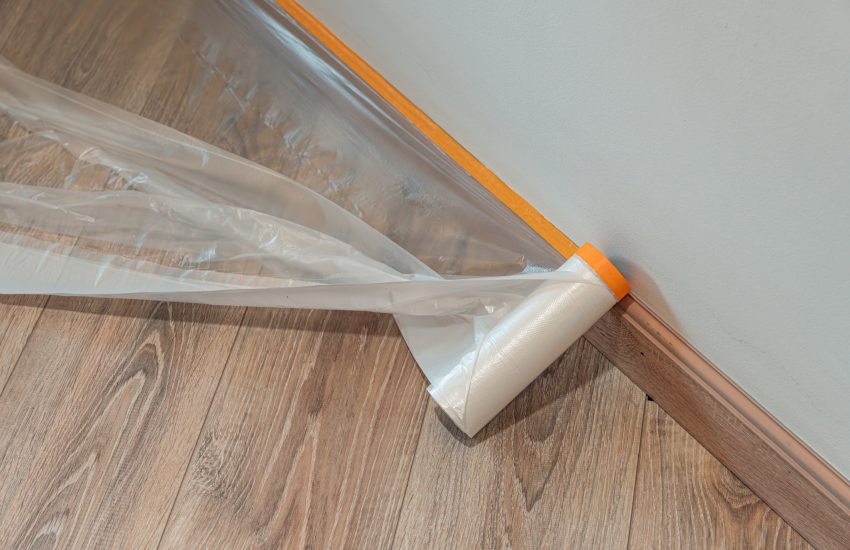
Adhesive film bonds lightly to the surface, so it can’t shift, curl or create a trip edge, and it needs no tape.
Koffler’s floor and stair protection film is 30 mil, breathable and reusable, with a plastic top that keeps spills from soaking through. It protects hardwood, granite, marble and tile for up to 100 days, and it works on stairs and countertops where a board won’t sit flat. Warm water removes any adhesive left behind.
Carpet needs its own film. Carpet film plastic protection grips the fibers and keeps dirt out for up to 30 days. It comes reverse wound, with the adhesive on the outside of the roll, and applicator kits speed up long hallway runs.
Poly-Craft and Floor Pads for Smaller Jobs
The Poly-Craft floor protector puts a flat fiberglass layer between 40 lb kraft paper and a polyethylene sheet. It’s waterproof, tear resistant and safe on colored, stamped and epoxy finished concrete as well as marble, tile and vinyl. Painter’s tape or clear tape holds it down, and it comes in 3 by 200 foot and 6 by 300 foot rolls.
For a foyer, a landing or a short path across hardwood, temporary floor protection pads may be all you need. Each 36 by 48 inch cardboard pad holds itself down with four foam adhesive strips and lifts off without residue.
When Ram Board Is Still the Right Call
Ram Board earns its cost when a job checks more than one of these boxes:
- New or curing floors
Vapor-Cure lets moisture escape so concrete cures evenly.
- Heavy trades
Drywall, framing and flooring crews drop tools and roll carts.
- Wet work
Spill Guard handles water, paint and mud.
- Several phases
A reusable board moves from one area to the next.
For a paint job on a cured floor, paper or film usually does the work for less.
Frequently Asked Questions
Is Ram Board just cardboard?
It looks like heavy cardboard, but it’s engineered for floors. Flex-Fiber reinforcement adds strength, Spill Guard resists water, paint and mud, and Vapor-Cure lets moisture escape from a curing floor.
Is Ram Board worth it?
On a job with heavy trades, wet work or a curing floor, yes. It covers impact, liquids and cure lines in one product, and you can reuse it. On a quick paint job over a cured floor, paper or film costs less.
Can you reuse Ram Board?
Yes. Ram Board is reusable, and it’s recycled and recyclable at the end of its life.
What’s the cheapest way to protect a floor during construction?
For dust, paint and foot traffic on a cured floor, paper is usually the lowest cost option. Step up to board when tools, ladders or carts are involved.
What do you use to protect carpet during construction?
An adhesive carpet film. It grips the carpet, keeps dirt and spills out, and peels up when the work is done.
Can you tape Ram Board to the floor?
Tape the seams board to board and keep tape off the floor itself. Ram Board’s own instructions say not to tape directly on the floor.
Compare every board, paper and film in Koffler’s temporary floor protection range, or talk to a Koffler specialist to match protection to your floor and schedule.
Sources: Ram Board, Builderboard, reinforced rosin paper, Poly-Craft, floor film, carpet film and floor pad product pages on kofflersales.com.