
 Posted by
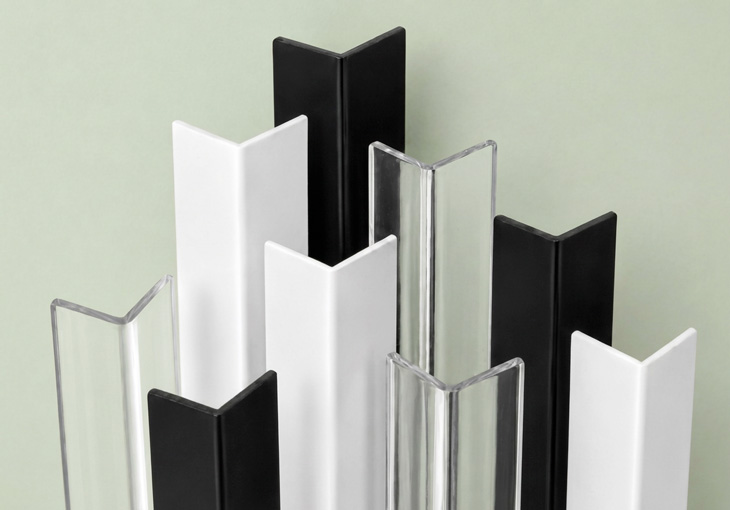
To protect a drywall corner, start with corner bead when the wall is built, cover the corner with temporary protection while trades are still working, and fit a permanent corner guard once the space is in use. The right permanent guard depends on what hits the corner: clear or paintable plastic for homes, textured vinyl for offices, retainer systems for busy corridors, stainless steel for kitchens and hospitals, and heavy duty rubber for warehouses.
An outside corner sticks out into the room and takes the first hit from every cart, chair and vacuum. Once the paper face tears, the gypsum behind it crumbles fast. Here’s how each stage of protection works.
Corner Bead and Corner Guards Do Different Jobs
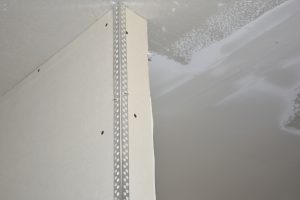
Corner bead is part of the wall. Drywall crews fasten a metal or vinyl angle over the corner, then bury it under joint compound and paint. It gives the corner a straight edge and some resistance to dings.
A corner guard goes on top of the finished wall. It’s a separate profile in plastic, vinyl, rubber or metal that takes the impact so the bead and drywall underneath stay intact. Bead shapes the corner, and a guard protects it.
That’s why a bent bead needs repair before a guard goes on. A guard set over a damaged corner won’t sit flat. The steps in how to fix a damaged wall corner cover the patching sequence.
Protecting Corners During Construction
New drywall is most vulnerable between the final coat of paint and handover. Flooring crews, painters and movers all roll equipment past fresh corners, and every dent becomes a punch list item.
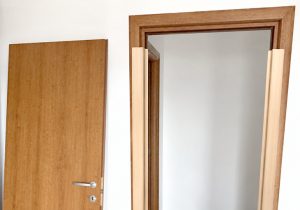
Koffler’s door frame and corner temporary protection covers that gap. It’s high-impact, fiber reinforced cardboard. Corner pieces run 48 inches and hold with blue painter’s tape. Door frame pieces run 60 inches and fit frames 4 to 8 inches wide, and door edge pieces fit doors 1 to 2 inches thick. Both hold themselves in place. When the job wraps, pull everything off and reuse it on the next project.
Before the building opens, swap the busiest corners over to permanent guards.
Which Corner Guard for Which Room
| Room | Guard that fits | Why |
| Home hallway or living area | Clear and colored smooth corner guards or paintable plastic corner guards | Clear guards let the wall color show through. Paintable guards take the wall paint and disappear. |
| Office, school or retail | Textured corner guards | Rigid yet flexible PVC in 70 standard colors. The texture hides scuffs. |
| Corridor with carts and equipment | Corner guards with aluminum retainer | A hidden aluminum retainer takes the impact and the PVC cover springs back. |
| Commercial kitchen or hospital | Stainless steel corner guards | Type 304, 16 gauge stainless with a brushed No. 4 finish that’s easy to sanitize. |
| Warehouse, garage or loading dock | Heavy duty rubber corner guards | SBR and EPDM rubber, 0.875 inches thick at the corner, with 4 inch wings. |
| Angled or irregular corners | Flexible vinyl corner guards by InPro | Flexible PVC that adjusts plus or minus 10 degrees to fit. |
For a closer look at how each material performs, see choosing the right wall corner guards.
How High Should a Drywall Corner Guard Go?
Protect the zone that actually takes hits. In homes and light commercial spaces, 4 ft covers chairs, vacuums and carts. In hospitals, schools and industrial corridors, 8 ft is standard because beds and equipment make contact higher up. The corner guard height guide covers when to cut down and when to go taller. When the damage sits in the first foot above the floor, baseboard corner protectors cover that zone.
Installing a Guard on Drywall
Smooth, painted drywall in good condition takes a peel-and-stick guard well once the paint has cured for 30 days. Textured walls, repaired corners and busy corridors are better served by adhesive, screws or a retainer. Koffler’s guide to installing paintable corner guards walks through the peel-and-stick method step by step.
Frequently Asked Questions
How do you protect corners of drywall?
Use corner bead when the wall is built, temporary corner protection during construction, and a permanent corner guard once the space is in use. The permanent guard keeps the corner intact year after year.
What are the best corner protectors for walls?
It depends on the traffic. Clear or paintable plastic suits homes. Textured vinyl suits offices and schools. Retainer systems suit busy corridors, stainless suits kitchens and hospitals, and heavy duty rubber suits warehouses and garages.
How do you install corner guards on drywall?
Clean the corner, let fresh paint cure for 30 days, then fit the guard with tape, adhesive or screws depending on the profile. The corner guard installation guide covers every method.
Are corner protectors necessary?
Wherever corners take regular contact, yes. A guard costs less than repeated patching and repainting. The corner guard installation ROI breakdown compares the costs.
Browse every profile in Koffler’s corner guards range, or talk to a Koffler specialist to match a guard to your traffic and finish.
Sources: Koffler product pages for temporary corner protection, clear, paintable, textured, retainer, stainless steel, heavy duty rubber and InPro flexible corner guards.