
 Posted by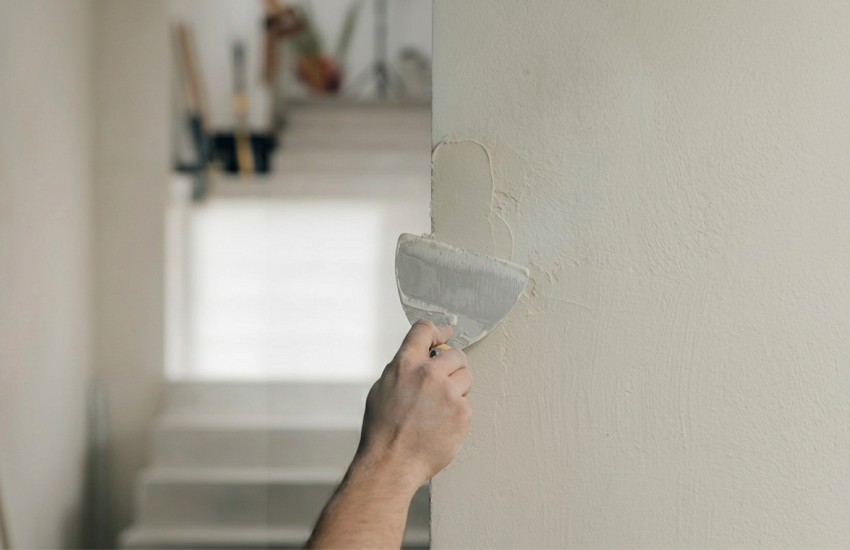
Damaged wall corners are one of the most common repair problems in any home. A single bump from moving furniture, a teething puppy, a rogue vacuum, or a kid’s toy can crack the paint, dent the drywall, or peel the corner bead right off the wall. And once a corner gets dinged, it looks rough every time you walk past it.
The good news? You can fix almost any damaged wall corner yourself in an afternoon with basic tools. This guide walks you through every common type of damage and shows you exactly how to repair it. We’ll cover small dents, deep gouges, dog-chewed corners, bent corner beads, and full chunks missing from the drywall. Plus, we’ll show you how to stop the damage from happening again.
Quick Answer: For most damaged wall corners, you’ll need joint compound (spackle), a putty knife, sandpaper, primer, and paint. Small dents can be fixed in 30 minutes. Bigger damage with a bent corner bead takes 2-3 hours plus drying time. Replacing a damaged corner bead section costs under $20 in materials.
What’s Actually Behind Your Wall Corner?
Before you grab the spackle, it helps to understand what you’re fixing. Most outside wall corners in a modern home have three layers:
- Drywall, the gypsum panels that make up your wall
- Corner bead, a metal, vinyl, or paper-faced strip that reinforces the outside edge where two drywall panels meet
- Joint compound and paint, the smooth finish that hides the corner bead
The corner bead is the hero here. Without it, raw drywall edges would crumble from the slightest contact. But the bead itself takes all the impact, so it dents, cracks, and pops loose over time.
So when you fix a damaged wall corner, you’re really fixing one (or more) of these three layers depending on how bad the damage is.
Step 1: Diagnose the Damage Type
Not all corner damage needs the same fix. Match your problem to one of these four categories, and you’ll know exactly what to do.
| Damage Type | What You’ll See | Repair Level | Time Required |
|---|---|---|---|
| Small dent or chip | Tiny dent, flaking paint, no exposed metal | Easy, compound only | 30 min + drying |
| Deep dent or gouge | Exposed corner bead, cracked compound | Medium, fill and refinish | 1-2 hrs + drying |
| Bent or loose corner bead | Visible bent metal, corner out of square | Hard, partial replacement | 2-3 hrs + drying |
| Chunk missing or dog damage | Missing material, holes, chewed-up edges | Hard, rebuild with filler or patch | 3-4 hrs + drying |
Pick your category, then jump to the matching section below.
Tools and Materials You’ll Need
Here’s the full toolkit for any wall corner repair. Most of this costs under $50 at any hardware store.
Basic repair (small dents and chips)
- Putty knife (3 or 4 inch)
- Joint compound or lightweight spackle
- Fine-grit sandpaper (220-grit)
- Primer
- Matching wall paint
- Small paint brush or roller
Advanced repair (add these for bigger damage)
- Utility knife
- Hacksaw or tin snips (for cutting corner bead)
- Drywall screws or finish nails
- Replacement corner bead (metal or vinyl)
- Fiberglass mesh drywall tape
- Wider taping knife (6-8 inch)
- Sanding sponge or drywall sander
Extra supplies for dog damage
- Wood filler or two-part epoxy putty
- Medium-grit sandpaper (120-grit) for shaping
How to Fix Small Dents and Chips in a Wall Corner
This is the most common repair, and it’s genuinely easy. If the corner bead underneath isn’t bent, you can fix the whole thing with a spackle.
Step 1: Clean the Damaged Area
Scrape away any loose paint, cracked compound, or flaking material with your putty knife. You want a clean, solid surface for the new compound to stick to. Wipe the area with a damp cloth to remove dust.
Step 2: Apply the First Coat of Compound
Load a small amount of joint compound onto your putty knife. Press it into the dent, then drag the knife along the corner to smooth it out. Build the compound slightly higher than the surrounding wall so you can sand it flush later.
Keep the putty knife flat against the corner bead edge. This creates a perfectly straight line as you smooth the compound.
Step 3: Let It Dry
Drying time depends on the compound. Quick-set spackle dries in 30-60 minutes. A standard joint compound takes 24 hours. Don’t rush this step, or the second coat won’t bond properly.
Step 4: Sand Smooth
Use 220-grit sandpaper or a sanding sponge to sand the compound flush with the wall. Work gently so you don’t sand through to the corner bead. The goal is a seamless transition between the repair and the existing wall.
Step 5: Apply a Second Coat If Needed
If the first coat shrank or didn’t fully fill the damage, apply a second thin coat. Sand again after it dries.
Step 6: Prime and Paint
Spot prime the repaired area with a stain-blocking primer. Let it dry, then paint with your wall color. Feather the paint out past the repair area to blend with the surrounding wall.
Pro tip: Paint matching is the hardest part of this whole job. Even if you know the color name, paint fades over time. For the best match, take a chip of the existing paint to the hardware store and have them color-match it.
How to Fix Deep Dents and Gouges
Deeper damage that exposes the corner bead or creates a visible gouge needs a bit more work. But the corner bead itself is still intact, so you don’t need to replace it.
Step 1: Remove Loose Material
Scrape away all loose compound, paint, and any crumbly drywall around the damage. Use your utility knife to trim rough edges. You want clean, solid material to build on.
Step 2: Apply Setting-Type Compound
For deeper gouges, use a setting-type joint compound (sold as “20-minute mud” or “45-minute mud”) instead of lightweight spackle. It bonds stronger and shrinks less.
Press the compound firmly into the damage, filling the void completely. Smooth it out with your putty knife, keeping the knife flat against the corner bead on each side.
Step 3: Build Up in Layers
Deep damage needs multiple thin coats rather than one thick one. Thick coats crack as they dry. Apply a thin first coat, let it dry, then sand lightly. Apply a second coat, let it dry, sand again.
Step 4: Finish With a Wider Knife
On your final coat, switch to a 6-inch taping knife. This spreads the compound farther out onto the wall, creating a smoother transition that’s invisible after painting.
Step 5: Sand, Prime, and Paint
Sand everything flush with 220-grit sandpaper. Prime the repair, then paint to match.
For high-traffic areas where deep damage keeps happening, prevent it next time with aluminum retainer corner guards that absorb impacts before they reach the drywall.
How to Fix a Bent or Loose Corner Bead
When the metal corner bead itself bends or pops loose from the wall, you can’t just cover it up with compound. The bead needs to be reshaped or replaced.
Option A: Small Bend (Reshape It)
For a small kink in an otherwise good corner bead, try this first:
- Check how bad the bend is. Gently press the corner bead back into position with your fingers or pliers.
- If it holds, secure it with a couple of drywall screws through the existing holes or slots.
- Apply joint compound over the entire repaired section, feathering it out on both sides.
- Sand, prime, and paint.
Option B: Major Damage (Partial Replacement)
If the bead is badly bent, crumpled, or crushed, cut out the damaged section and install a new piece.
Step 1: Mark the cut lines. Mark a few inches above and below the damaged section. You want clean cuts in undamaged areas.
Step 2: Cut through the corner bead. Use a hacksaw or oscillating saw to cut horizontally through the bead at both marks.
Step 3: Score and remove. Use your utility knife to score along the sides of the damaged bead, then pry it off the wall with a small pry bar or the edge of your putty knife.
Step 4: Clean the exposed drywall. Scrape away old compound and any loose drywall paper. Smooth any rough spots.
Step 5: Cut the replacement bead. Measure the gap and cut a new piece of corner bead to fit. Use tin snips for metal bead or a utility knife for vinyl bead.
Step 6: Install the new bead. Position the new section flush against the existing bead above and below. Secure it with drywall screws or finish nails every 8 inches.
Pro tip: Consider switching to vinyl corner bead when you replace metal. Vinyl resists denting better than metal, won’t rust, and flexes slightly on impact instead of permanently deforming. Paper-faced composite bead is another strong option for high-traffic areas.
Step 7: Tape the seam. Apply fiberglass mesh drywall tape over the horizontal seams where new meets old. This prevents cracking as the wall settles.
Step 8: Apply compound in layers. Build up two or three thin coats of joint compound over the bead and tape. Sand between coats.
Step 9: Final sand, prime, and paint. Finish the same way as smaller repairs.
How to Fix a Dog-Chewed Wall Corner
Teething puppies, anxious dogs, and bored pets all do this. The damage usually looks like gnawed drywall paper, splintered corner bead, and sometimes missing chunks of wall material. It looks worse than it is.
Step 1: Clean Up Loose Debris
Use a utility knife to carefully cut away any splinters, frayed drywall paper, or hanging bits. Cut away from your body. Sand the damaged area lightly to smooth out rough edges.
Step 2: Assess What’s Underneath
If the dog chewed only through paint and paper, skip to Step 4. If the corner bead is exposed and bent or chewed through, follow the corner bead replacement steps from the section above first.
Step 3: Fill With the Right Product
For dog damage, wood filler or two-part epoxy putty often works better than regular joint compound, especially on baseboard corners. These products:
- Set harder than regular spackle
- Resist future chewing better
- Hold their shape when you rebuild the corner
For drywall corners specifically, setting-type joint compound works great. For wooden baseboard corners, go with wood filler or epoxy.
Step 4: Rebuild the Corner Shape
Apply the filler in layers, building up the corner back to its original shape. Use a putty knife to shape it while it’s still workable. It does not have to be perfect at this stage, you’ll sand it into final shape later.
Step 5: Sand to Shape
Once fully dry, use 120-grit sandpaper to shape the filler. Then switch to 220-grit for the final smooth finish. Work gently around the corner to maintain the clean edge.
Step 6: Prime and Paint
Finish the same way as any other wall corner repair.
Step 7: Install a Corner Guard (Critical)
Here’s the part most guides skip. If you don’t protect the repaired corner, your dog will likely chew it again. Install a clear or colored corner guard over the entire corner to prevent future damage. Our peel-and-stick corner guards install in minutes and create a physical barrier that dogs can’t chew through.
For more on choosing the right type for your home, our ultimate guide to clear corner guards covers invisible protection options that preserve your wall’s look.
How to Fix a Wall Corner With a Chunk Missing
Major damage where a whole chunk of drywall and corner bead is missing takes the most work. But you can still do it yourself.
Step 1: Square Off the Damage. Draw a clean rectangle or square around the damaged area using a pencil and a level. Include enough wall on each side to create a solid patching area.
Step 2: Cut Out the Damaged Section. Use a drywall saw or utility knife to cut along your lines. Remove the damaged drywall and the damaged corner bead section.
Step 3: Add Backing if Needed. If the hole is deep or the drywall edges feel flimsy, add wooden backing behind the hole. Cut a piece of 1×4 pine a few inches longer than the hole. Insert it into the wall cavity behind the opening and secure it with construction adhesive and drywall screws.
Step 4: Cut and Install a Drywall Patch. Cut a new piece of drywall to match your hole. Test fit it first. Once it fits, screw it to the backing or studs with drywall screws.
Step 5: Install New Corner Bead. Cut a new piece of corner bead to span from a few inches above to a few inches below the patch. Attach it over the patched corner with screws or nails.
Step 6: Tape the Seams. Apply fiberglass mesh tape over every seam between new drywall and old. Apply more tape along the corner bead edges where they meet the old bead.
Step 7: Mud, Sand, Prime, Paint. Build up joint compound in 2-3 thin coats. Sand between each coat. Finish with primer and paint.
Pro Tips Most Repair Guides Don’t Cover
After helping homeowners and facility managers solve wall damage problems for 50+ years, here are the tips that actually save time and money.
Tip 1: Use Setting-Type Compound for Deep Repairs
Standard lightweight spackle shrinks as it dries. That’s fine for small dents but terrible for deep damage. Setting-type joint compound (the kind you mix from powder or buy in a “20-minute” or “45-minute” formula) cures through chemical reaction, not evaporation. So it doesn’t shrink, and it bonds stronger.
Tip 2: Keep a Damp Sponge Handy
Wipe your putty knife and the edges of your repair with a damp sponge as you work. This smooths the compound and reduces how much sanding you’ll need to do later. Sanding creates dust you have to clean up, so any step that reduces sanding saves work.
Tip 3: Feather the Paint Wide
When you spot-paint a repair, don’t just paint the patch. Feather the paint out 6-12 inches past the repair on both sides of the corner. This blends the new paint with the old and hides the repair line.
Tip 4: Match the Paint Sheen
Wall paint comes in different sheens (matte, gloss, flat, eggshell, satin, semi-gloss). Even with a perfect color match, a different sheen will make your repair stand out. If you’re not sure what sheen the original paint was, test a small area first.
Tip 5: Upgrade to Vinyl or Composite Bead
When you replace damaged metal corner bead, switch to vinyl or paper-faced composite bead instead. Both types resist denting better than metal, don’t rust, and install faster. You’ll thank yourself the next time someone bumps into that corner.
Tip 6: Repair During Low-Humidity Weather If Possible
Joint compound dries faster in dry air and slower in humid air. If you can pick your weather, repair on a low-humidity day for faster project completion. Run a dehumidifier in the room if you’re working in summer.
Tip 7: Plan the Prevention Fix Before You Start
Think about why the corner got damaged in the first place. If it’s in a high-traffic hallway, vacuuming path, or pet zone, repairing without adding protection means you’ll repair the same spot again next year. Install a corner guard immediately after the repair dries.
The Real Cost: Repair vs Prevention
Wall corner repairs add up fast, especially in homes and commercial spaces with repeat damage. Here are the estimate ranges:
| Scenario | One-Time Cost | Frequency | Annual Cost |
|---|---|---|---|
| DIY small dent repair | $10-20 in supplies | 2-4 times/year | $40-80 |
| DIY major repair (bead replacement) | $30-50 in supplies | 1-2 times/year | $50-100 |
| Pro repair (small damage) | $60-170 per incident | 2-3 times/year | $180-500 |
| Pro repair (major damage) | $200-500 per incident | 1 time/year | $200-500 |
| Corner guard installation | $5-40 per guard | One-time | $0 ongoing |
The math is simple. A single corner guard costs less than one professional repair and prevents damage for 15+ years. For more on the financial side, check out our corner guard installation ROI analysis.
How to Stop Wall Corner Damage From Happening Again
Fixing damage is one thing. Preventing it is smarter. Here’s how to protect your repaired corners so you never have to fix them again.
Install Corner Guards
The most effective solution is a physical barrier over the corner. Corner guards come in:
- Clear polycarbonate, invisible protection for upscale spaces
- Colored vinyl, matches any wall color, easy to install
- Stainless steel, heavy-duty protection for commercial and high-traffic residential
- Rubber, soft, shock-absorbing, great for kid rooms and pet areas
- Paintable, blend completely with your existing paint
Which type fits your home? Our guide to how to match a guard to your traffic level walks through the options in detail.
Address the Root Cause
If your dog is chewing walls, look at the behavioral cause: boredom, anxiety, teething, or lack of exercise. Corner guards stop the damage, but also give your dog appropriate chew toys and enough stimulation.
If furniture keeps bumping the same corner, move the furniture path or add a buffer piece.
If kids or carts cause the damage, protect the corner with a guard that matches the level of traffic.
Upgrade Your Corner Bead
When you do major repairs, swap metal bead for vinyl or paper-faced composite. These bend on impact instead of permanently denting. They also resist the rust that makes metal bead look bad over time.
Frequently Asked Questions
How do I fix a small dent in a wall corner?
Scrape away loose paint and compound, apply a thin layer of joint compound with a putty knife, let it dry, sand smooth, then prime and paint. The whole process takes about 30 minutes of work plus drying time.
What causes wall corners to get damaged?
The most common causes are moving furniture, vacuum cleaners hitting the corner, kids running into walls, pets (especially teething puppies), moving carts in commercial spaces, and normal building settling that pops the corner bead loose.
Can I fix a bent metal corner bead without replacing it?
For small bends, yes. Gently press the bead back into shape with pliers, secure it with screws, then cover with joint compound. For major bends or crushed sections, you need to cut out the damaged piece and install a new one.
How do I fix a wall corner my dog chewed?
Clean up loose debris with a utility knife, fill the chewed area with wood filler or joint compound, sand smooth, prime, and paint. Then install a corner guard to prevent your dog from chewing it again.
What’s the difference between spackle and joint compound?
Spackle is a lightweight filler that dries fast and is best for small holes and dents. Joint compound (also called “mud”) is heavier, bonds better for large repairs, and comes in both setting and drying types. For wall corner repairs, setting-type joint compound works best for anything deeper than a small chip.
How long does a wall corner repair take?
Small dents take about 30 minutes of active work plus drying time. Deep repairs with corner bead replacement take 2-3 hours of active work plus 24 hours of drying time between coats.
Do I need to replace the corner bead or can I just patch over it?
If the bead is straight and securely attached, patch over it with compound. If the bead is bent, loose, or rusted, replace the damaged section. Patching over a bent bead creates a crooked corner that looks worse than the original damage.
Can I paint over a repaired wall corner without priming?
It’s risky. Fresh joint compound absorbs paint differently than the surrounding wall, so you’ll see a shiny spot or color difference without primer. Always prime spot repairs before painting.
What’s the cost of repairing a damaged wall corner?
DIY repairs run $10-50 in materials depending on damage severity. Professional repairs cost $60-170 for small fixes and $200-500 for major damage with corner bead replacement. Installing a corner guard ($5-40) often costs less than a single professional repair.
Fix It Once, Protect It Forever
Damaged wall corners look bad, but they’re not hard to fix. Small dents take 30 minutes. Major damage takes a few hours. The tools cost less than $50, and the skills are basic enough that any patient DIYer can nail it.
The real lesson from every wall corner repair is this: if you fix the damage without preventing it from happening again, you’ll be back in the same spot next year with the same repair. So after your corner dries and the paint looks fresh, install a corner guard.
Ready to protect your walls for good? Browse clear, colored, metal, rubber and paintable corner guard profiles to match any home or commercial space. Want to see what the top brands offer? Our top corner guard brands article breaks down the best options. Our team has helped homeowners and commercial builders solve wall damage problems for over 50 years.