
 Posted by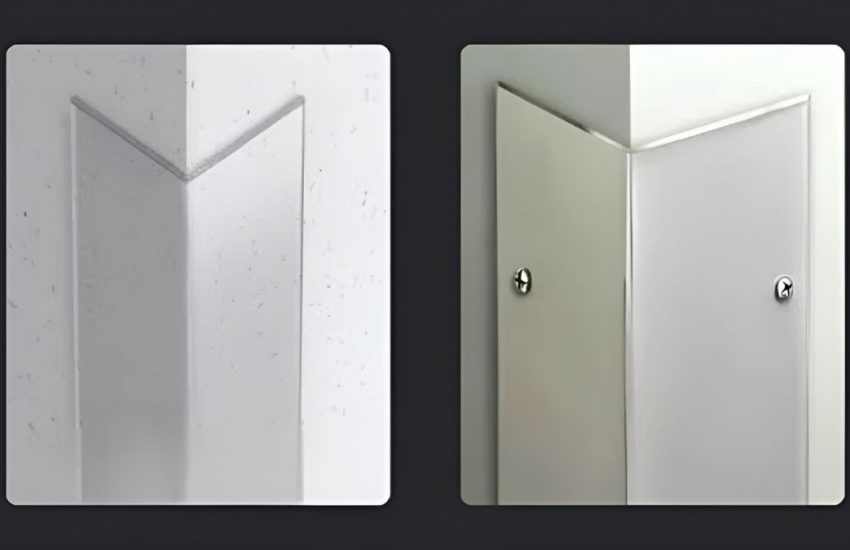
One of the biggest decisions when choosing a corner guard is the mounting method: do you go with peel-and-stick (adhesive) or screw-in (mechanical) installation? In this article, we will walk you through how those two compare, from installation to durability, aesthetics to cost, so you can pick the right method for the space you are protecting. And if you are ready to get started, browse adhesive backed and retainer mounted corner guards to explore your options.
Key Takeaways
- Peel-and-stick corner guards install quickly and cleanly with adhesive backing, ideal for smooth, low-traffic surfaces or temporary setups.
- Screw-in corner guards anchor more securely, offering long-lasting protection on textured or uneven walls and in high-traffic environments.
- Consider your wall surface, traffic level, and permanence needs when choosing between the two.
- Surface condition decides more than preference does. Adhesive will not hold on textured, dusty or oily walls no matter how good the tape is.
- Freshly painted walls need 30 days to cure before adhesive goes on. This single step causes more failures than any other.
At a Glance
| Peel-and-stick | Screw-in | |
|---|---|---|
| Install time | Minutes, no tools | Longer, needs drilling and marking |
| Best surface | Smooth, clean, dry drywall or tile | Textured, uneven, or previously repaired walls |
| Traffic level | Light to moderate | Heavy, including carts and equipment |
| Typical material | Vinyl or plastic | Aluminum, stainless steel, heavy polycarbonate |
| Visible hardware | None | Screws or caps, sometimes concealed |
| Upfront cost | Lower | Higher |
| Long-term value | Good in the right conditions | Better where impacts are frequent |
| Removable | Yes, with care | No, effectively permanent |
What Are Peel-and-Stick Corner Guards?
Peel-and-stick profiles such as textured corner guards come with an adhesive backing for easy installation. Simply clean the wall surface, peel off the liner, and press the guard into place.
These guards are popular for residential spaces, offices, or areas where drilling is not ideal. They create a clean, seamless look without visible hardware, and installation takes just minutes.
However, peel-and-stick options rely heavily on surface quality and cleanliness. Adhesive performs best on smooth, dry, dust-free surfaces and may struggle with moisture, heavy impacts, or textured walls.
Make sure to allow all freshly painted surfaces to cure for at least 30 days prior to installing peel-and-stick corner guards. Avoid installing over vinyl wall coverings.
What Are Screw-In Corner Guards?
Screw-in profiles such as clear plastic corner guards are anchored using screws or wall plugs. Installation takes more time and tools, but it produces a strong, permanent hold, ideal for areas exposed to frequent contact or heavy use.
These guards are typically used in hospitals, schools, hotels, warehouses, and other high-traffic environments. While screws or caps may be visible, they provide stability and long-term peace of mind.
Shop This Guide
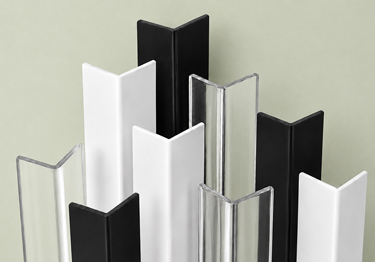
Clear & Colored Smooth Corner Guards
Best for Adhesive backed, the fastest install
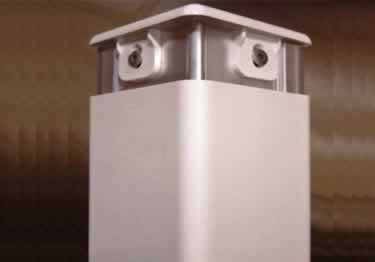
Corner Guards with Aluminum Retainer
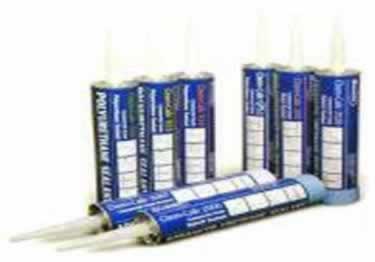
Plastic Corner Guard Adhesive
Best for A permanent bond where factory tape is not enough
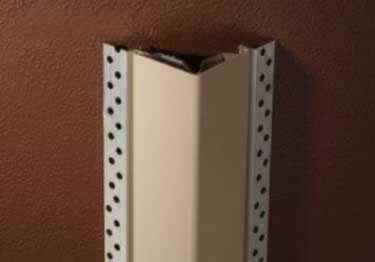
Flush Mounted Corner Guards
Best for Recessed into the wall for a smooth line
Installation Difficulty and Surface Compatibility
Installation ease is one of the biggest differences between these two systems.
Peel-and-stick is generally faster, simpler, and less invasive, with no drilling, anchors, or special tools, and it works well on smooth, clean drywall or tile. Screw-in involves marking holes, drilling, and sometimes wall anchors, a little more effort, but highly reliable once installed.
Surface compatibility is key: if your walls are textured, uneven, dusty, or oily, adhesive may not hold well. High humidity or temperature changes can also weaken the bond. Environment matters, too: in high-traffic corridors or areas where carts, luggage, or equipment hit corners, screw-in mounting almost always provides better long-term performance.
One case sits outside both categories. A corner that has already been damaged and patched is not a sound surface for adhesive, and it often is not square enough for a rigid profile to sit flat either. Our guide to repairing a corner before you mount anything on it covers what has to happen first.
Materials, Durability, and Impact Resistance
Mounting style often aligns with material type and intended use. Peel-and-stick guards are typically made from vinyl or plastic, which are flexible and cost-effective for lighter-duty protection. Screw-in guards often use aluminum, stainless steel, or heavy polycarbonate, making them more rigid and resistant to damage.
If your corners face frequent or forceful impacts, mechanical mounting will resist pull-away and shifting much better than adhesive alone. For lower-impact areas, peel-and-stick guards offer sufficient protection without overcomplicating installation.
Height plays into this more than most people expect. An 8 ft run carries more weight and takes more leverage in an impact than a 4 ft one, so a full-height guard is a stronger candidate for mechanical fixing. The guide to standard heights and cutting down covers how the two standard lengths are used.
Aesthetic Considerations and Hardware Visibility
If appearance matters, as it does in offices, hotels, or decorative interiors, peel-and-stick guards have the edge. They offer a clean, hardware-free look that blends seamlessly with walls. But you will also need to ensure the adhesive remains stable over time and that removal will not peel paint or leave residue.
Screw-in guards, while stronger, usually have visible hardware. Some models offer concealed fasteners or decorative caps for a sleeker appearance. Depending on your design vision, visible screws can either complement an industrial aesthetic or detract from a minimalist look.
Also consider how the mounting method affects design flexibility: adhesive guards might limit surface finishes, since you generally cannot install easily over textured or wallpapered corners unless adhesion is proven. Meanwhile, screw-in can accommodate more wall types, albeit with slightly more intrusive installation.
There is a third route to an invisible finish that has nothing to do with the fixing. A profile that takes the wall color hides the guard whether it is screwed or taped, and painting a guard to match the wall walks through how to get the finish right.
Cost, Labor, and Long-Term Value
Peel-and-stick guards win on speed and simplicity. They save labor time, require minimal tools, and are ideal when you want immediate results at a lower upfront cost.
Screw-in guards, while more involved to install, offer long-term value in high-traffic settings because they last longer and rarely need replacement.
So when evaluating cost, think beyond materials. Factor in installation time, maintenance, and potential wall repairs if corners are not adequately protected. Often, spending a little more on the right mounting type saves much more in the long run.
When Peel-and-Stick Is the Better Choice
Choose peel-and-stick corner guards when:
- The wall surface is smooth, clean, dry and in good condition
- The traffic level is light to moderate, with few heavy carts or impacts
- You need a fast, non-invasive installation
- Aesthetics are a priority and visible hardware is undesirable
- You are on a budget or working within tight timelines
When Screw-In Is the Better Choice
Opt for screw-in corner guards when:
- Walls are uneven, textured, or not ideal for adhesives
- The space sees frequent heavy impacts from carts, equipment, or moving loads
- You want maximum durability and minimal maintenance
- Conditions involve moisture, dust, or temperature changes
- You prefer a permanent, high-strength solution
In these settings, the added effort and cost upfront pays off in performance and longevity.
Choosing the Right Corner Guard Mounting Method
If you are looking for a quick, mess-free install or need something removable, peel-and-stick corner guards are a great choice. If you want maximum durability and do not mind a few extra steps, screw-in guards are the better long-term solution.
Mounting is the last decision, not the first. Material comes before it, because the material largely determines which fixings are even available. Our guide to matching material to traffic and surface works through that step.
Frequently Asked Questions
Do peel-and-stick corner guards actually hold?
On a smooth, clean, dry wall, yes, and they hold for years. Nearly every failure traces back to the surface rather than the tape: dust, grease, texture, or paint that had not finished curing.
How long should paint cure before installing an adhesive guard?
30 days. Fresh paint continues to release solvents after it feels dry, and those solvents prevent the adhesive from forming a proper bond. This is the single most common cause of a guard falling off weeks after installation.
Can peel-and-stick corner guards be used over wallpaper?
No. Avoid vinyl wall coverings and wallpaper entirely. The adhesive bonds to the covering rather than the wall, and the covering itself will lift. On a papered corner, use a mechanically fixed guard.
Can you remove a peel-and-stick corner guard?
It can be done, but plan on repainting. Removal usually takes some paint and leaves adhesive residue behind. Treat an adhesive install as permanent unless the guard is going onto a surface you expect to redecorate anyway.
Are screw-in corner guards stronger than adhesive ones?
The mounting is, and that is what matters under impact. Adhesive can shear away from the wall under a hard enough hit while the guard itself is undamaged. A mechanical fixing keeps the guard in place and lets the material take the blow.
Do you need to drill into studs to fit a screw-in corner guard?
Not usually. Wall plugs or drywall anchors are enough for most profiles, since the load is impact rather than weight. Masonry needs proper anchors, and metal framing takes self-tapping screws.
Can you hide the screws on a screw-in corner guard?
Yes, on some models. Concealed fastener systems and decorative caps both exist, and a retainer system hides the fixings entirely behind the snap-on cover, which is why those are specified where appearance and durability both matter.
Which mounting method is cheaper overall?
Adhesive is cheaper to buy and to fit. Whether it is cheaper overall depends on the corner. In light traffic it stays cheaper. In a corridor that takes daily cart impacts, a mechanically fixed guard usually costs less across five years because it is not being replaced.
Not sure which method suits your walls? Talk to a Koffler specialist and we will match the mounting to your surface, your traffic and your timeline.