
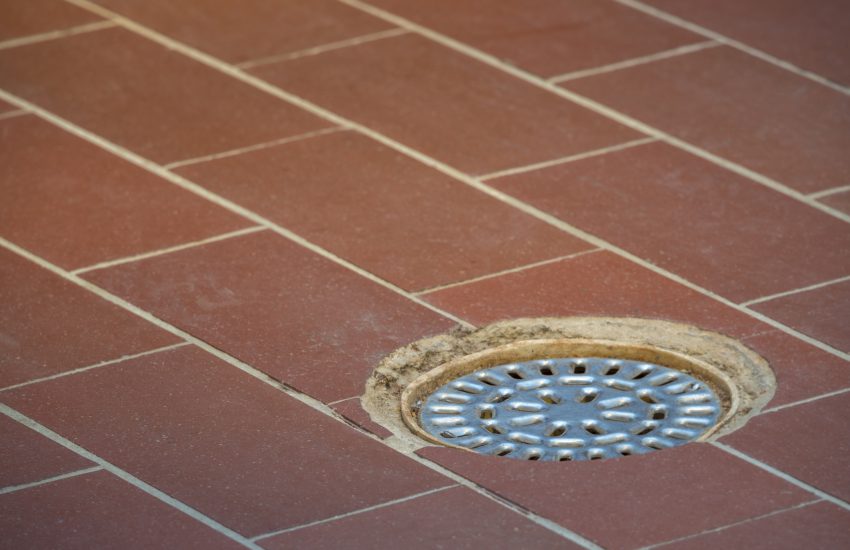
 Posted by
A trap primer keeps a floor drain sealed by adding water to its trap on a schedule. A waterless trap seal keeps it sealed with a one-way valve that opens when water flows and closes when the floor is dry. The International Plumbing Code accepts both as trap seal protection for floor drains that lose their water to evaporation. A primer needs a water supply line, while a waterless seal fits into the drain you already have.
This guide covers why floor drains go dry, how each method works, where each one fits and how to fit a waterless seal in a few minutes.
Why Floor Drains Start to Smell
Every floor drain has a trap, a bend in the pipe that holds water. The IPC calls for a trap seal at least 2 inches and no more than 4 inches deep, and that water is the barrier between the room and the sewer.
In mechanical rooms, basements, storage rooms and restrooms that are seldom mopped, nothing refills the trap. The water evaporates, the barrier goes with it, and sewer gas, odors and drain flies come up through the open pipe.
Pouring a bucket of water down the drain fixes it for a while. Someone then has to repeat it on a schedule, in every room, for the life of the building. Trap seal protection takes that chore off the maintenance list.
How a Trap Primer Works
A trap primer is a valve that sends a small amount of water into the trap to replace what evaporates. The IPC lists three types:
- Potable water primer valves
Conform to ASSE 1018 and draw from the building’s water supply. - Wastewater primer devices
Conform to ASSE 1044 and use drain water from a nearby fixture. - Fixture drain priming
Routes a lavatory, hand sink or drinking fountain drain to refill a floor drain, trench drain or floor sink.
Each type depends on a water or drain line run to the floor drain. In new construction, that piping goes in with the rough plumbing. In an existing building, adding it usually means opening a wall or floor.
How a Waterless Trap Seal Works
A waterless trap seal is a barrier-type device that fits inside the drain and covers the trap with a one-way valve, so it needs no water supply. The IPC accepts barrier-type trap seal protection devices that conform to ASSE 1072.
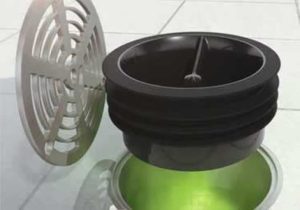
The Green Drain waterless floor drain trap works this way. Water flowing into the drain pushes its silicone flapper open. When the flow stops, the flapper closes and seals off sewer gas, odors and pests, and an attached silicone skirt keeps drain flies, roaches and rodents from coming up the pipe. The housing is UV resistant ABS plastic with four flexible sealing ribs. Green Drain is certified to ASSE 1072 and UPC, and listed with IAPMO and ICC.
Trap Primer vs Waterless Trap Seal at a Glance
| Trap primer | Waterless trap seal | |
| How it protects the seal | Adds water to replace what evaporates | Closes the drain with a one-way valve when no water flows |
| Needs a water or drain line | Yes | No |
| Standard | ASSE 1018 or ASSE 1044 | ASSE 1072 |
| Installation | Piping run to the floor drain, usually by a plumber | Fits into the drain outlet or strainer |
| Existing buildings | Usually means opening a wall or floor | Fits without demolition |
| Best for | New construction with priming planned into the plumbing | Retrofits and drains that sit dry for long stretches |
Plumbing code adoption varies by state and city, so confirm the accepted method with your local plumbing official before you specify either one.
Where Waterless Trap Seals Fit
- Mechanical and boiler rooms
Emergency floor drains here can sit dry for months between uses. - Basements and storage rooms
Low-use drains are the most common source of a sewer smell. - Restrooms and locker rooms
Floor drains that see little water between cleanings dry out and draw drain flies. - Healthcare facilities
Drains hold microbial biofilm, and Green Drain’s manufacturer recommends a physical barrier between the drain and the room. - Commercial kitchens
Green Drain also fits kitchen sink drain housings, where it cuts garbage disposal noise and backsplash.
Drain Flies and Floor Drains
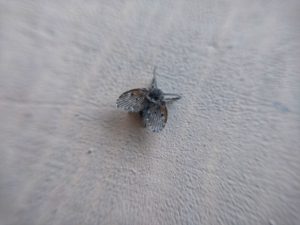
Drain flies breed in the organic film that builds up inside drains and traps. Their life cycle runs one to three weeks, and adults live about two weeks, so a few flies become many quickly. No insecticides are registered for use in drains, so control starts with removing the film where they breed.
Clean the drain line first with an enzyme treatment such as ZymeCLING gel or Nilozyme trap and drain treatment, both sold alongside Green Drain. Then seal the drain so new flies stay below the floor.
How to Install a Waterless Trap Seal
- Clear any blockage in the drain line before you start.
- Lift out the strainer and clean the drain opening.
- Measure the pipe with the Green Drain pipe template to confirm the connection size. Green Drain comes in 1.25, 1.5, 2, 2.5, 3, 3.5, 4, 5 and 6 inch sizes.
- Push the seal into the drain outlet until the sealing ribs grip the pipe. On some drains it fits inside the floor drain strainer instead.
- In 1.25, 1.5 and 2 inch shower drains, set the seal 3 to 4 inches down into the drain. These sizes drain 12 to 15 gallons per minute, and recessing them lets the weight of the water speed the flow.
- Replace the strainer and run water to check that the drain flows freely and the flapper closes.
Frequently Asked Questions
What is a trap primer?
A valve that adds water to a floor drain’s trap so the seal stays full. It connects to a water supply or a fixture drain and conforms to ASSE 1018 or ASSE 1044.
Is a waterless trap seal up to code?
The IPC lists barrier-type trap seal protection devices that conform to ASSE 1072 as an approved method for floor drains subject to evaporation, and Green Drain is certified to ASSE 1072. Confirm with your local plumbing official, since adoption varies.
Why does my floor drain smell like sewage?
The water in its trap has most likely evaporated, which leaves an open path for sewer gas. Refill the trap to stop the smell now, then add trap seal protection so the drain stays sealed.
How do you get rid of drain flies in a floor drain?
Clean the organic film out of the drain with an enzyme treatment, since that film is where the flies breed. Then fit a waterless trap seal so new flies stay below the floor.
Can you just pour water down a floor drain?
Yes, and it works until the water evaporates again. A waterless trap seal removes the need to keep adding water to the trap.
Does a waterless trap seal slow drainage?
Green Drain’s manufacturer says it keeps full flow rate. The 1.25, 1.5 and 2 inch sizes drain 12 to 15 gallons per minute, so recess them 3 to 4 inches into a shower drain to keep water from pooling.
Find Green Drain and other restroom products in Koffler’s commercial bathroom accessories category, or talk to a Koffler specialist to size a seal for your drains.
Sources: ICC overview of plumbing trap requirements; Nilodor drain fly infiltration sheet; Koffler Green Drain product page.