
 Posted by
The base is a finishing detail. It also guards the bottom of the wall. Get the spec right and it lasts for years. The material has to suit three things. The floor it meets. The traffic it takes. The moisture in the room. This guide covers the choices in order. First, material by flooring type. Then sizing, profile, color, install, and cost. New to the category? Start with the basics of base trim. Then browse the full range of vinyl and rubber cove base products.
Key Takeaways
- Match the base material to the flooring. Each floor asks for something different.
- Rubber suits commercial vinyl and heavy traffic. It flexes and cleans up fast.
- Wood and tall vinyl suit hardwood rooms. They add warmth in homes and offices.
- The carpet takes a straight, toeless base. It sits flat against the pile.
- Height, profile, and color matter too. Get all four right.
Best Wall Base for Hardwood or Engineered Wood Floors
Recommended material: Wood base or a tall vinyl alternative.
Wood floors read warm. The trim should match that. A wood base picks up the grain and tone. It gives an upscale finish. Want the look with less upkeep? Try a tall vinyl base in white or a neutral shade. It mimics painted wood. Plus it pairs well with base shoe molding.
Top pick: The Mannington Vinyl Wall Base has a clean matte finish. It works with solid and engineered hardwood. It suits living rooms, dining rooms, and bedrooms.
Best elsewhere: Rubber cove base shines in commercial and utility rooms. Save it for those spaces.
Best Wall Base for Commercial Vinyl and LVT Flooring
Recommended material: Rubber wall base.
Sheet vinyl and LVT take abuse. So the base has to keep pace. Rubber gives the impact resistance those floors need. It wipes down fast. And it holds a clean, sanitary line at the floor.
Top pick: The Rubber Wall Base by Armstrong is a commercial-vinyl staple. It comes in several heights and colors. It comes in a cove profile too.
Best elsewhere: Wood base performs best in dry, residential rooms. Choose it there instead.
Best Wall Base for Tile or Laminate Flooring
Recommended material: Vinyl wall base.
Ceramic, porcelain, and laminate read sleek. A minimal vinyl base holds that line. It works with the floor, not against it. Kitchens, baths, and basements call for a waterproof base. In dry laminate areas, try a decorative thermoplastic base. A coordinating color adds a modern edge.
Top pick: The Johnsonite Vinyl Wall Base installs fast and prices well. It pairs with tile and laminate. It suits residential and light commercial rooms.
Best elsewhere: Wood base thrives in dry, formal rooms. Choose it there instead.
Best Wall Base for Carpeted Floors
Recommended material: Vinyl or rubber straight base.
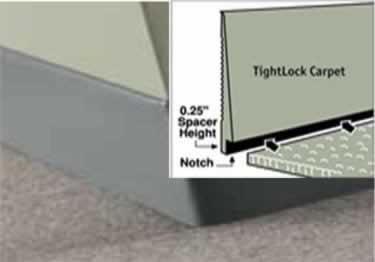
Carpet needs a straight, non-cove base. A cove toe rides up on the pile. It leaves a gap. A flexible straight base sits flat. Plus it follows an uneven edge.
Top pick: The Johnsonite Tightlock Rubber Wall Base has a clean straight profile. It suits carpeted offices, corridors, and meeting rooms. It resists scuffs. And it comes in a wide color run.
Best elsewhere: Cove base performs best over hard flooring. Match it there instead.
Weighing the two main materials? See how vinyl and rubber compare head to head.
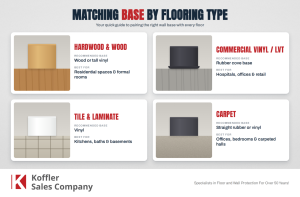
Your Guide to Matching Base by Flooring Type
| Flooring type | Recommended base | Best for |
|---|---|---|
| Hardwood or engineered wood | Wood or tall vinyl | Residential spaces, formal rooms |
| Commercial vinyl or LVT | Rubber cove base | Hospitals, offices, retail |
| Tile or laminate | Vinyl | Kitchens, baths, basements |
| Carpet | Straight rubber or vinyl | Offices, bedrooms, carpeted halls |
Getting the Size and Profile Right
Height runs from 2.5 to 6 inches. Homes land at 2.5 to 4 inches. Commercial spaces push to 4.5 to 6 inches. That adds protection. It also meets hygiene codes. Profile matters just as much. A cove base has a toe. The toe seals to the floor for resilient and hard flooring. A straight base sits flush for carpet. For the full walk-through, see the wall base sizing guide.
Choosing a Color and Ordering the Right Lengths
Color ties the room together. Rubber leans toward muted browns, grays, and blues. Vinyl offers versatile grays and darker tones. Dark colors hide wear. Lighter shades open a space up. Order free samples first. Check them against your walls and floors in natural light. Then commit to a dye lot. On length, pre-cut 4 foot strips suit small and medium rooms. Continuous 120 foot rolls cut seams and labor on long runs. Measure the perimeter first. Add about 10 percent for cutting and fitting.
Compare the Leading Brands
Set the material first. Then the brand drives stock, color matching, and warranty. Johnsonite, Roppe, and Flexco lead the commercial market. They are easy to specify and quick to source. For a side by side of the names Koffler carries, see the wall base brands worth specifying.
Installation Factors That May Shape Your Choice
Think about who installs it. And how hard the run will be. Rubber base needs a strong adhesive and pro tools. That adds labor. Vinyl goes down with fewer tools. Peel-and-stick is the easiest of all. Wall texture, floor height, and subfloor all affect the bond. Cove base has a curved lower edge. It blocks moisture at the floor. It also simplifies cleaning. So it fits high-traffic and healthcare rooms. Steer around the usual traps with the guide to wall base installation mistakes to avoid.
Matching Base Styles With Residential and Commercial Interiors
The base should read with the room. In modern offices and retail, matte rubber stays low-key. A neutral tone works best. In traditional homes, a tall white vinyl base fits. It pairs with crown molding and trim. Decorative thermoplastic base adds color to a boutique or cafe. And it keeps the durability. Weigh material, color, and height against the floor and the wall finish.
Durability, Maintenance, and Cost
The base drives long-term maintenance as much as looks. Wood is warm and full of character. It does want repainting, and humidity can warp it. So save it for dry rooms. Rubber costs more up front. It earns that back in high-impact, high-traffic spaces. Vinyl is easier on the budget. It performs well in dry, low-traffic rooms. A home office runs fine on vinyl. A school hallway wants rubber. To line material up against budget and lifetime value, read the guide to cost and labor planning for commercial installs. To keep it looking new, see how to keep baseboards clean.
Selecting Wall Base With Confidence
Treat each base as its own tool. Wood thrives in dry rooms. Rubber handles busy corridors. Vinyl fits light-traffic, dry spaces. Match the material to the space. Check the wall texture and floor finish. Confirm the height covers the wall. Then order with confidence.
On a wall base job the money is not in the material, it is in the labor. Pick a base your crew can run in long rolls instead of short strips, get the toe profile right for the floor, and you cut installation time and callbacks more than any spec sheet ever will.
Shop This Guide
Ready to buy? These products fit the guidance above.
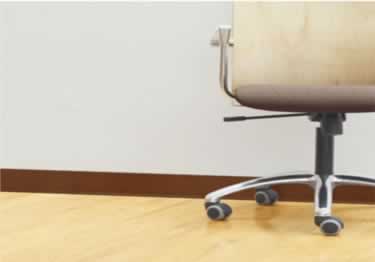

Rubber Wall Base by Armstrong
Best for Scuff-resistant rubber for commercial vinyl and high traffic
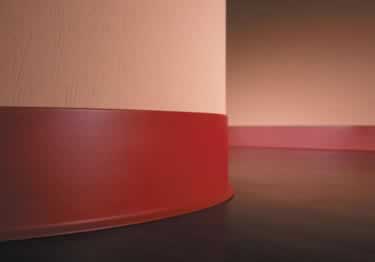
Johnsonite Tightlock Rubber Wall Base
Best for Straight profile built for carpet in offices and halls
Frequently Asked Questions When Choosing Wall Base
What is the best wall base for tile floors?
Rubber and vinyl both work well. They resist moisture and install fast. So they fit tile floors nicely. Vinyl keeps a clean, minimal look. Rubber adds impact resistance for busy rooms. So pick the one your space needs.
Can I use wood baseboards in a commercial setting?
Wood shines in dry, residential rooms. For commercial traffic, choose rubber or vinyl instead. They hold up far better. So they handle offices, healthcare, and retail with ease.
What is the difference between cove base and straight base?
The cove base has a curved toe. The toe seals tight to the floor. So it’s the standard for hard flooring. It suits resilient floors well too. The straight base stays toeless instead. It sits flush and suits the carpet. So match the profile to your floor. Then the base seats are clean.
How do I know what height to choose?
Height depends on two things. First, the protection you want. Second, the look you’re after. Four inches is the versatile default. Six inches adds protection in busy areas. So a taller base essentially guards more of the wall.
Is a peel-and-stick vinyl base durable enough?
Yes, for light-use residential areas. It grips smooth, clean walls well. For damp or busy spaces, use a troweled adhesive. That bond holds much stronger. So match the install to the room.
Should I buy strips or rolls?
Both options work great. Pre-cut 4-foot strips handle easily. So they suit small and medium rooms. Continuous 120-foot rolls cut seams. They also speed up long hallways. So rolls win for large runs.
Ready to specify? Contact our team to size a full building.