
 Posted by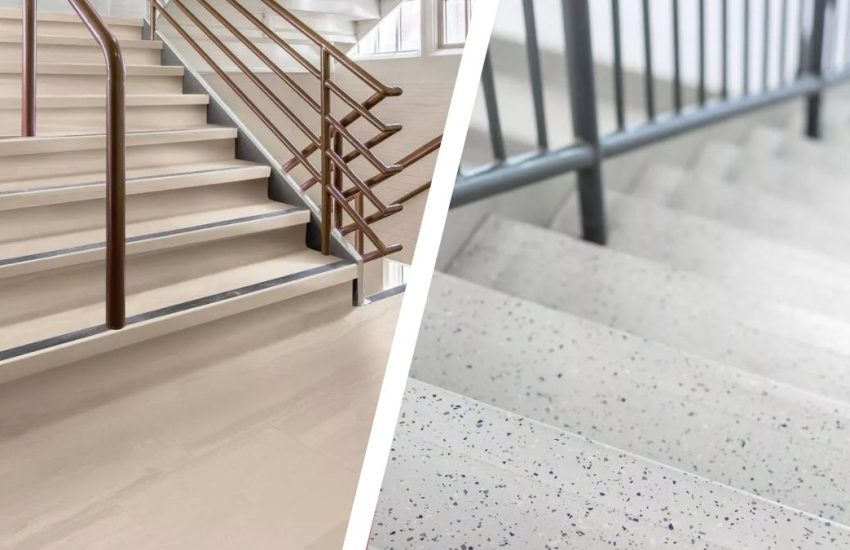
When it comes to stair safety and longevity, choosing the right tread material can make all the difference. The choice between vinyl stair treads and rubber stair treads impacts not only how your stairs look, but how they perform—from slip resistance and comfort to long-term maintenance costs.
In this guide, we’ll break down everything you need to know about vinyl and rubber treads for stairs, including how they compare, where each performs best, and how to choose the right option for your space.
What Are Vinyl Stair Treads?
Vinyl stair treads are made from polyvinyl chloride (PVC), a synthetic plastic polymer prized for its versatility and cost-effectiveness. Vinyl stair nosing typically features a smooth or lightly textured surface that offers moderate slip resistance while maintaining a clean, polished look.
Modern vinyl stair treads come in a wide range of colors, patterns, and styles, allowing for seamless integration with existing flooring and décor. From designs that mimic natural wood grain to solid tones that match commercial branding, vinyl offers a lot of design flexibility. This versatility makes vinyl treads particularly appealing for spaces like retail settings, hospitality venues, and residential properties—where visual appeal is just as important as function.
What Are Rubber Stair Treads?
Rubber stair treads are made from natural or synthetic rubber compounds, creating a material prized for its exceptional slip resistance, durability, and resilience. Rubberized stair treads typically feature textured surfaces, raised patterns, or grooved designs that provide superior traction even in wet or oily conditions.
Rubber stair treads resist damage from chemicals, oils, and harsh cleaning agents, making them ideal for industrial settings, and their robust construction withstands heavy foot traffic, rolling carts, and equipment without showing premature wear.
Vinyl vs Rubber Stair Treads: A Side-by-Side Comparison
| Feature | Vinyl Stair Treads | Rubber Stair Treads |
| Slip Resistance | Moderate; depends on surface texture and finish | Excellent; superior traction even in wet conditions |
| Durability | Good; suitable for light to moderate traffic | Excellent; withstands heavy use and traffic |
| Cost | Lower initial investment | Higher upfront cost, better long-term value |
| Maintenance | Easy to clean; may show scuffs | Very easy to maintain; hides wear well |
| Chemical Resistance | Moderate; can be damaged by harsh chemicals | Excellent; resists oils, chemicals, and solvents |
| Noise Reduction | Limited sound dampening | Superior noise absorption; quieter underfoot |
| Lifespan | 5-10 years in moderate traffic | 10-20+ years in heavy traffic |
| Indoor/Outdoor | Primarily for indoor environments | Generally suitable for both indoor and outdoor |
| Best Applications | Offices, retail, residential, low-traffic areas | Industrial, healthcare, high-traffic, commercial |
Factors to Consider When Choosing
Traffic Volume and Type
A good starting point is to think about how much daily use your stairs see.
- Light residential traffic places minimal demands on stair treads, making vinyl a practical and budget-friendly choice that will meet most needs.
- Moderate commercial traffic can be handled by either material, though rubber offers a slight durability advantage.
- Heavy industrial or institutional use strongly favors rubber over vinyl stair treads for its superior resistance to wear and impact
Environmental Conditions
Next, think about the specific conditions your stair treads will face. Environment will factor largely in performance and longevity.
- For dry, indoor spaces, in general, both vinyl and rubber will perform reliably.
- However, if your stairs are exposed to moisture, oil, grease, or chemicals, rubber treads deliver essential slip protection and greater chemical resistance.
- Outdoor applications or areas with temperature fluctuations also benefit from rubber’s weather resilience.
Safety Requirements
When comparing stair tread materials, safety should always guide your choice.
Assess the level of slip resistance your application demands. Standard office environments may find vinyl’s moderate traction sufficient.
However, areas where moisture is present—entryways during rainy weather, kitchen access stairs, pool decks, and the like—would generally do better with the textured grip of rubberized stair treads, which provide greater slip resistance and stability.
Budget Considerations
Initial cost isn’t the whole story—balance those upfront costs against long-term value.
Vinyl stair treads have a lower entry price, making them attractive for budget-conscious projects. In comparison, rubber’s extended lifespan may actually cost less over time despite higher upfront investment. A good rubber tread that lasts 15-20 years may prove more economical than a vinyl tread that ends up needing replacement every 7-10 years.
Quick Tip on Choosing Between the Vinyl and Rubber Stair Treads
When you’re narrowing things down, consider your stairway’s specific conditions: traffic volume, environmental challenges, safety requirements, aesthetic expectations, and more. If you need rugged and long-lasting protection, rubber may deliver the best value over time. And if you’re working with more controlled indoor settings with lighter use, vinyl’s a dependable and attractive choice.
Different environments demand different performance features.
Vinyl stair treads are an economical, design-versatile option—perfect for homes, light-traffic commercial settings, and other spaces where style and cost-effectiveness matter. Their wide variety of colors and finishes makes design integration seamless and easy.
Rubber stair treads are built for performance. Naturally, rubber excels in industrial, healthcare, high-traffic spaces, and otherwise more demanding applications—where safety, durability, noise reduction, and long-term performance are non-negotiables. Any environment with moisture or contaminant exposure will also benefit from rubber’s superior slip resistance.
Ready to improve your stair safety with the right treads? Explore our full range of Johnsonite vinyl and rubber stair treads, or browse our comprehensive stair tread collection at Koffler Sales. We’d love to help you find the perfect treads for your space.
FAQs About Vinyl and Rubber Stair Treads
Which is more slip-resistant: vinyl or rubber stair treads?
Rubber stair treads provide superior slip resistance compared to vinyl, especially in wet or contaminated conditions.
How long do vinyl vs rubber stair treads typically last?
Vinyl stair treads generally last 5-10 years depending on use and maintenance, while rubber treads for stairs may be able to endure 10-20+ years even in demanding environments, making them a better long-term investment for high-traffic applications.
Can I use vinyl stair treads outdoors?
Some vinyl stair treads are rated for outdoor use, but rubber generally performs better in most exterior applications. Vinyl can become brittle in cold weather and slippery when wet, while rubberized stair treads maintain their properties across wider temperature ranges and provide reliable traction in all weather.