
 Posted by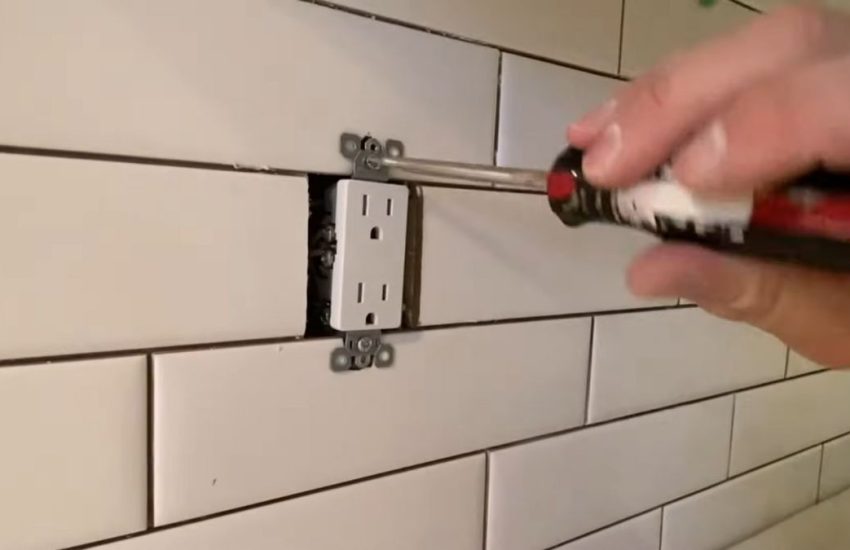
Installing a new kitchen backsplash shouldn’t slow down a renovation project, especially in commercial environments where units need a fast turnaround. AquaWalls’ laser-etched acrylic backsplash panels are designed specifically for multifamily, hospitality, student housing, and senior living kitchens, giving installers a grout-free, maintenance-free solution that looks like real subway tile.
Working around electrical outlets is one of the few areas that requires careful attention. Because AquaWalls panels can be cut with standard tools, the process is faster and simpler than traditional tile. This guide walks you through the safest and cleanest way to install your panels around outlets.
Planning Your Tile Layout Around Outlets Before You Cut
AquaWalls panels are laser-etched to simulate consistent subway tile lines, so planning your layout is key to achieving a professional finish.
Start by removing the outlet cover plates with the power off. This allows you to see the full electrical box and plan your cuts accordingly. Next, dry-fit your panels on the countertop or against the wall to visualize how the etched pattern lines up with the outlet location.
Ideally, you want to avoid having the outlet fall directly on an etched grout line, which can complicate cutting and installation. Take photos of your layout from multiple angles for reference once you begin applying adhesive. If you’re working with multiple panels, mark the positions where cuts will be necessary to maintain pattern continuity.
This planning step ensures clean alignment and minimizes cutting complexity, saving you time.
Measure and Mark Cutouts Precisely
Because AquaWalls panels are acrylic, even small measurement errors will be noticeable in the finished installation. Precision is critical. Follow these steps for accuracy:
- Measure the exact height and width of the electrical box relative to a fixed reference point, typically the countertop or wall edge.
- Use a combination square or ruler to transfer those measurements onto the panel, marking all four corners of the outlet opening.
- Apply painter’s tape to the panel surface before marking, it improves pencil line visibility and helps prevent surface scuffs during the cutting process.
- Double-check all measurements before cutting. Remember the old carpenter’s adage: measure twice, cut once.
- If you’re using tile spacers to maintain pattern consistency, remember to account for spacing width in your measurements. These small gaps can throw off your calculations if overlooked.
Measuring twice and cutting once is especially important for achieving a seamless visual finish with acrylic panels.
Cutting Tiles for Outlet Openings
Unlike ceramic tile that requires a wet saw, AquaWalls acrylic panels can be cut using common installation tools that most contractors already have on hand:
- Utility knife with a sharp blade
- Oscillating multi-tool
- Fine-tooth saw
- Tin snips (depending on installer preference and panel thickness)
When cutting out the outlet opening, cut slightly smaller than your outline first. You can always enlarge an opening with additional cuts, but you can’t undo a cut that’s too large. Work slowly and steadily to prevent the acrylic from cracking or chipping.
Always test-fit your cut panel against the outlet before applying any adhesive. The opening should sit cleanly around the electrical box without excessive gaps, but not so tight that you have to force the panel into place.
Installing Around Outlets
Once your outlet cutouts are complete and test-fitted, you’re ready to proceed with installation:
- Apply the included adhesive to the wall according to the kit instructions. AquaWalls kits come with everything you need for proper adhesion.
- Begin placing panels, working from your starting point toward the outlet area.
- Use the included tile spacers only if needed to maintain consistency with the laser-etched pattern.
- As you approach the outlet, leave the area immediately around the outlet clear of adhesive until all cut panels are test-fitted. This prevents the adhesive from drying before you can work with it.
- Press panels firmly into place, ensuring full adhesion to the wall while keeping the outlet box undisturbed. Check that your panels stay level and aligned with the etched pattern.
- Once the adhesive has fully cured according to the manufacturer’s instructions, reinstall the outlet covers.
AquaWalls kits are engineered for fast commercial installation, with most kitchens can be completed in as little as two hours, making them ideal for high-volume renovation projects.
Why AquaWalls Makes Outlet Installation Easier
AquaWalls backsplash systems offer several advantages over traditional tile when it comes to working around outlets:
- No grout, no mess: The laser-etched acrylic creates the authentic look of subway tile without actual grout lines to work around or maintain.
- Lightweight panels mean less physical strain on installers and easier positioning and adjustment around outlets during installation.
- Simple cutting with basic tools speeds up labor time significantly compared to wet-sawing ceramic tile, reducing both equipment costs and installation time.
For multifamily property managers, hospitality operators, and commercial contractors looking for a fast, durable backsplash solution, AquaWalls delivers professional results without the complexity of traditional tile. The ability to cut panels with standard tools and complete installations in a fraction of the time makes working around outlets significantly faster and more efficient.