
 Posted by
Tile edging trim does more than just finish a job—it defines it. These long molded strips, often in metal or plastic, are key to protecting tile edges while elevating a space’s design. Whether it’s a tiled shower wall or a bathroom baseboard, the right trim turns raw edges into refined lines.
Most people don’t give these details much thought until installation day. But choosing the wrong trim depth, finish, or type can lead to costly errors. That’s why it’s worth knowing your options, and we’ve got you covered.
Quick Tips
Choosing the right tile edge trim goes beyond matching colors—it’s about precision and protection.
-
Match depth to tile size: Choose trims that are 1/16″ to 1/8″ deeper than your tile thickness.
-
Use metal in high-traffic zones: Stainless steel or aluminum stands up best to abrasion.
-
Choose lighter colors for flexibility: White or pastel trims blend well with most tile tones.
-
Mind the corner details: Use inside and outside trim profiles for clean transitions.
-
Cut with care: Use a miter box or fine-tooth saw for precise trim cuts.
Video Resource: How to Install Tile Edging Trim
Metal Tile Edging Trim Material Choices
Metal tile edging trim is the go-to choice for both durability and design versatility. It’s especially favored in high-traffic areas, wet zones like showers, and anywhere a crisp, modern look is desired. These trims are typically made from stainless steel, aluminum, or plated metals, offering a sleek profile that resists wear and moisture.
Designer metal finishes allow for stylish customization. Options include:
-
Stainless steel – Highly durable and corrosion-resistant, ideal for bathrooms and floors
-
Brass and simulated brass – Adds a warmer, classic look to more traditional tile designs
-
Coated or anodized aluminum – Lightweight and available in matte or glossy variations
Some profiles are designed to be formable, meaning they can be bent or shaped to wrap around curved surfaces like columns or wavy architectural elements. These are especially useful in custom projects where standard straight trims won’t do.
Trim Depth and Installation Tips
Depth and Transition Planning
Standard tile sizes are increasing, with many formats now 9–12mm thick. That means deeper trims are needed, especially when accommodating waterproof membranes or thinset buildup. Picking a trim that’s too shallow will expose tile edges or force awkward adjustments.
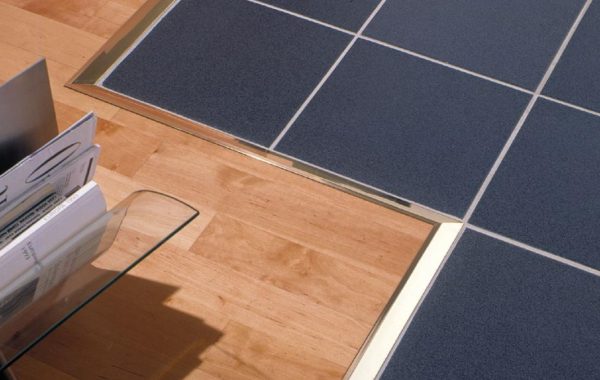
If your flooring transitions to carpet, vinyl, or wood, sloped or stair-nosed trims provide a smooth, safe connection. Floor tile trims can also be used to bridge small height differences and prevent tripping hazards.
Proper Installation Practices
Install trims before placing tiles. Mark the position based on your layout, apply polyurethane adhesive sparingly every 6″, and screw in if needed. This creates a firm edge for tile alignment. For vinyl skirting, open-back trims make installation easier.
Always keep dust traps in mind—select trim profiles that sit flush to surfaces without leaving deep recesses. This keeps cleaning simple and supports waterproof assemblies in wet areas like under sinks or at countertop transitions.
Finishing External and Internal Corners
Trims are essential for external edges like pony walls and benches, offering protection and clean lines. Most trims form a 90° angle, but some manufacturers offer pre-finished 45° square corners. These reduce the need for miters, though mitered joints still offer the most seamless appearance when done well.
For inside corners, most installers opt for silicone beads—but inside corner trims (also called cove trims) provide a more elegant and durable solution. They’re especially helpful in bathrooms, where ease of cleaning and moisture control matter.
Niche and Specialty Installations
When tiling around niches or shower features, pre-made recessed units with integrated trim can save time and reduce leaks. Mosaic tiles, often just 3mm thick, pair well with square stainless steel trims for fine-detail work. Specialty trims with embedded tracks are also available for mounting mosaic strips inside tile fields.
Finish Strong with Trim
The right tile edge trim isn’t just a finishing touch—it’s what makes your tiling project look complete, intentional, and built to last. From showers to flooring transitions, choosing the correct material, depth, and profile can save time, simplify installation, and improve the final result.
Whether you’re matching trim to your fixtures or installing a waterproof edge under a sink, make sure you plan ahead and cut with care. For more help selecting the best trim for your space, explore tile edge trim options trusted by contractors and DIYers alike.
Likewise, if you’re planning a larger flooring project, our Floor Tile Calculator can help you determine exactly how much tile you’ll need.