
 Posted by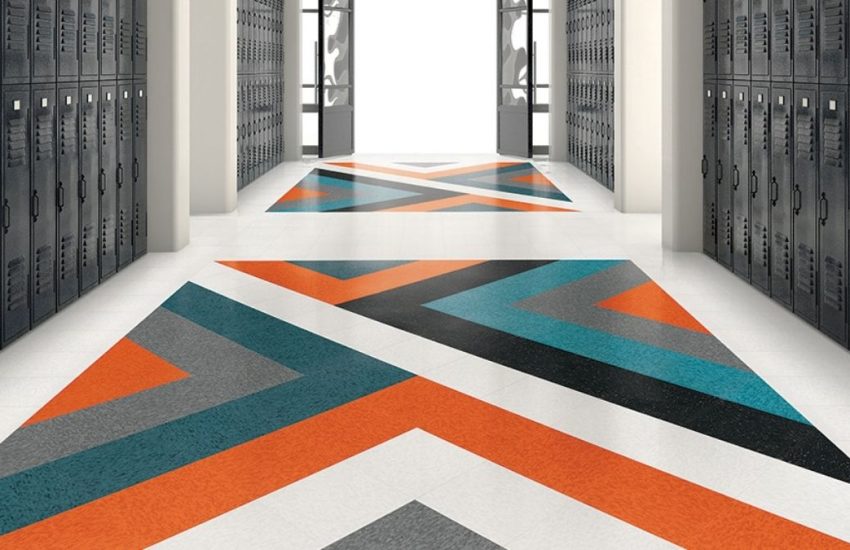
Walk into any school, hospital, or grocery store, and there’s a good chance you’re stepping on VCT flooring. It’s been a workhorse in commercial spaces for decades. Newer options like LVT and LVP have entered the market, but VCT hasn’t gone anywhere.
Why? Because it works. It’s affordable. And when you take care of it, it lasts.
Here’s what you need to know about VCT flooring, from what it’s made of to how to keep it looking sharp for years to come.
Looking for trusted options? Shop Armstrong VCT and Johnsonite VCT at Koffler Sales.
Key Takeaways
- VCT flooring is a resilient, composition-based tile designed for high-traffic environments.
- It’s commonly used in schools, healthcare facilities, retail spaces, and institutional buildings.
- VCT floor tile requires regular maintenance but can last decades when properly cared for.
- Compared to LVT or LVP, VCT typically has a lower upfront cost but higher long-term maintenance needs.
What is VCT Flooring?
VCT stands for vinyl composition tile. It’s made from a blend of vinyl resins, limestone fillers, and pigments, all pressed together into solid tiles. The most common size is 12 by 12 inches.
Here’s the key difference from luxury vinyl: VCT is porous. That means it needs to be sealed and finished after installation. The finish gives the floor its shine and protects the surface. It also means the floor needs ongoing care to stay looking its best.
Several features define VCT tile flooring:
- Rigid construction. VCT tiles are dense and dimensionally stable.
- Porous surface. VCT requires sealing and finishing for protection.
- Glue-down installation. Tiles are permanently adhered to the subfloor.
- Commercial-grade durability. VCT is designed for heavy, repeated use.
- Consistent sizing. This makes replacement and repairs straightforward.
Where VCT Flooring Is Commonly Used
VCT floors are most often installed in spaces that demand durability and easy replacement, including:
- Schools and universities
- Hospitals and healthcare facilities
- Retail stores and grocery chains
- Office buildings
- Government and municipal buildings
If a tile gets damaged, you can pop it out and replace it. No need to tear up the whole floor. That’s a major plus for large facilities with tight budgets.
History and Origins of VCT Flooring
VCT flooring became widely popular in the mid-20th century as a cost-effective alternative to linoleum and other hard flooring options. Its ability to be mass-produced, installed quickly, and maintained using standard commercial cleaning equipment made it especially appealing to institutional users.
For many years, VCT was the standard resilient flooring choice. Even as newer materials entered the market, its proven performance kept it firmly in place across many industries.
Pros and Cons of VCT Flooring
| Pros | Cons |
| Lower material cost (around $2/sq ft installed) compared to most resilient flooring options | Requires regular stripping, waxing, and refinishing every 6 to 18 months |
| Designed to withstand heavy foot traffic and rolling loads | Ongoing maintenance is more labor-intensive than newer vinyl products |
| Individual tiles can be replaced without removing the entire floor | Installation demands a smooth, carefully prepared subfloor with moisture testing |
| Long history of proven performance spanning 70+ years | Higher total cost of ownership over 15 years compared to LVT |
| 150+ color and pattern options from major manufacturers | Cannot match LVT’s photorealistic wood and stone aesthetics |
Installation Overview of VCT Flooring
Installing VCT flooring requires careful preparation. The subfloor must be clean, dry, smooth, and level, as imperfections can show through the tile surface. Tiles are installed using a permanent adhesive and rolled to ensure proper bonding.
After installation, the floor is typically sealed and finished with multiple coats of floor finish. This step is critical, as it protects the tile and sets the foundation for long-term performance. While some VCT products come with factory-applied finishes, traditional VCT installations still rely heavily on on-site finishing.
Because of the precision involved, professional installation is strongly recommended.
Maintenance and Long-Term Care
Maintenance is where VCT flooring perhaps differs most from newer vinyl alternatives.
A typical VCT floor care routine includes:
- Daily dust mopping or vacuuming
- Regular damp mopping with neutral cleaner
- Periodic buffing or burnishing
- Scheduled stripping and refinishing
While this may sound intensive, facilities that already have maintenance staff and equipment often find VCT manageable. When maintained properly, VCT floors can last for 20-30 years or longer.
Design and Layout Options
VCT might have a utilitarian reputation, but it offers more design flexibility than you’d expect. Armstrong’s Standard Excelon Imperial Texture line alone offers over 100 color and pattern options. Add in premium lines like Crown Texture and Stonetex, and you’re looking at 150+ choices.
VCT excels at geometric patterns. Checkerboard, herringbone, basketweave, and striped designs are all fair game. Custom capabilities include waterjet cutting for school logos and corporate branding. A creative layout can make a VCT floor look anything but basic.
That said, VCT cannot match LVT’s photorealistic aesthetics. If you want convincing wood grain or natural stone appearances, LVT is the better choice. VCT sticks to solid colors and semi-solid visuals.
Is VCT Flooring the Right Choice?
VCT flooring has earned its place through decades of hard use. Yes, it requires more maintenance than modern vinyl alternatives. But its durability, repairability, and affordability make it a smart pick for the right spaces.
If maintenance resources are limited, LVT or LVP might be a better fit. These newer options need less upkeep and skip the sealing and waxing. Keep in mind that many LVT and LVP systems, especially floating floors, may require underlayment, unlike glue-down VCT.
If you can commit to a regular maintenance schedule, VCT delivers excellent long-term value.
Frequently Asked Questions
What is VCT flooring made of?
VCT flooring is made from vinyl resins combined with limestone fillers and pigments, pressed into solid tiles.
Is VCT flooring still used today?
Yes. VCT floors remain common in schools, healthcare facilities, retail stores, and other high-traffic commercial spaces.
How long does a VCT floor last?
With proper maintenance, a VCT tile floor can last 20-30 years or longer.
Does VCT flooring need an underlayment?
No. VCT tiles are glued directly to a properly prepared subfloor, unlike floating vinyl systems that may require underlayment.