
 Posted by
Picking the wrong vinyl floor for a high-traffic facility is an expensive mistake. The flooring shows wear in 18 months, the facility manager calls it “cheap product,” and the real problem is almost always the same: somebody specced a residential-grade or light-commercial vinyl for a heavy-duty environment.
Heavy-duty commercial vinyl flooring isn’t a single product. It’s a tier of vinyl flooring rated to perform in lobbies, healthcare corridors, warehouses, schools, and retail floors where foot traffic, rolling loads, and aggressive cleaning protocols would destroy a lesser product. Choosing the right one comes down to three things: wear layer thickness, the right ASTM or EN rating for your environment, and matching the format (sheet, tile, or plank) to how the space is actually used.
This guide walks through how to spec heavy-duty commercial vinyl flooring without getting burned.
What Makes Vinyl Flooring “Heavy-Duty”?
Manufacturers throw the word “commercial” around loosely. A floor labeled “commercial grade” at a big-box retailer is not the same product spec’d into a hospital corridor. Heavy-duty commercial vinyl flooring is defined by measurable performance characteristics, not marketing language.
The core attributes are:
- Wear layer thickness of 20 mil or higher, typically 28 mil to 40 mil for the most demanding environments
- ASTM F1700 Class III rating for solid vinyl tile (the heavy commercial classification)
- ASTM F1303 Type II rating for sheet vinyl with backing
- EN ISO 10874 Class 33 or 34 in European-standard products (heavy commercial)
- Rolling load resistance (ASTM F2055) for facilities with carts, gurneys, or pallet jacks
- Urethane-reinforced or UV-cured surface treatment for stain and scuff resistance
If a vinyl floor doesn’t carry at least one of these ratings, it isn’t heavy-duty, regardless of what the data sheet says on the front.
Wear Layer Thickness: The Single Most Important Spec
Wear layer is the clear protective top coat that sits over the printed design layer. It’s measured in mils (one mil equals one-thousandth of an inch), and it determines how long the floor will look new under traffic. Everything else being equal, wear layer is the strongest predictor of how the floor will perform.
Here’s a working rule of thumb for matching wear layer to environment:
- 6 to 12 mil: residential only, do not spec for any commercial application
- 20 mil: light commercial (small office, low-traffic retail)
- 28 mil: standard heavy commercial (corporate offices, mid-traffic retail, schools)
- 40 mil: extra heavy duty (hospital corridors, airports, big-box retail, hospitality lobbies)
Wear layer alone isn’t enough. A thick wear layer over a poorly built core will still fail under rolling loads. But it’s the first number to look at on any spec sheet. If a product doesn’t publish its wear layer thickness in mils, that’s a signal it doesn’t have one worth advertising.
Sheet, Tile, or Plank? Format Matters as Much as Spec
The three primary formats of heavy-duty commercial vinyl flooring each excel in different environments. Choosing the wrong format for the space creates problems no amount of wear-layer thickness will fix.
Heat-Welded Sheet Vinyl
The gold standard for healthcare and clean environments. Sheets come in 6 to 12 foot wide rolls and are installed with heat-welded seams that fuse the material into a continuous, hygienic surface. Bacteria can’t grow in seams because there are no seams. This is the right spec for operating rooms, surgical suites, laboratories, and aseptic healthcare spaces.
Luxury Vinyl Tile (LVT)
LVT delivers the aesthetic flexibility of wood, stone, and abstract visuals with commercial-grade durability when spec’d correctly. It’s the right choice for retail interiors, hospitality, corporate offices, and any commercial space where design appeal matters as much as performance. For an overview of the leading manufacturers, see our breakdown of the top luxury vinyl tile brands for commercial projects. If you’re trying to justify the spend, we also cover the ROI of luxury vinyl tile in commercial properties.
Vinyl Composition Tile (VCT)
VCT remains a workhorse in schools, healthcare facilities, grocery stores, and institutional buildings where budgets are tight and damaged tiles need to be replaced individually rather than re-doing the whole floor. It carries higher maintenance demands than LVT but lower upfront cost, and it lasts decades when properly stripped and waxed. Our full VCT flooring guide covers maintenance protocols and where VCT outperforms LVT.
Luxury Vinyl Plank (LVP)
LVP is the long-format cousin of LVT, designed to mimic hardwood. It performs well in hospitality, multifamily, and retail spaces that want a residential wood look with commercial durability. If you’re deciding between LVT and LVP for a specific project, we covered the practical differences in LVT vs LVP flooring.
Matching Heavy-Duty Vinyl Flooring to Your Environment
Specifications mean little until they’re matched to a real environment. Here’s how the major heavy-duty applications break down.
Healthcare Facilities
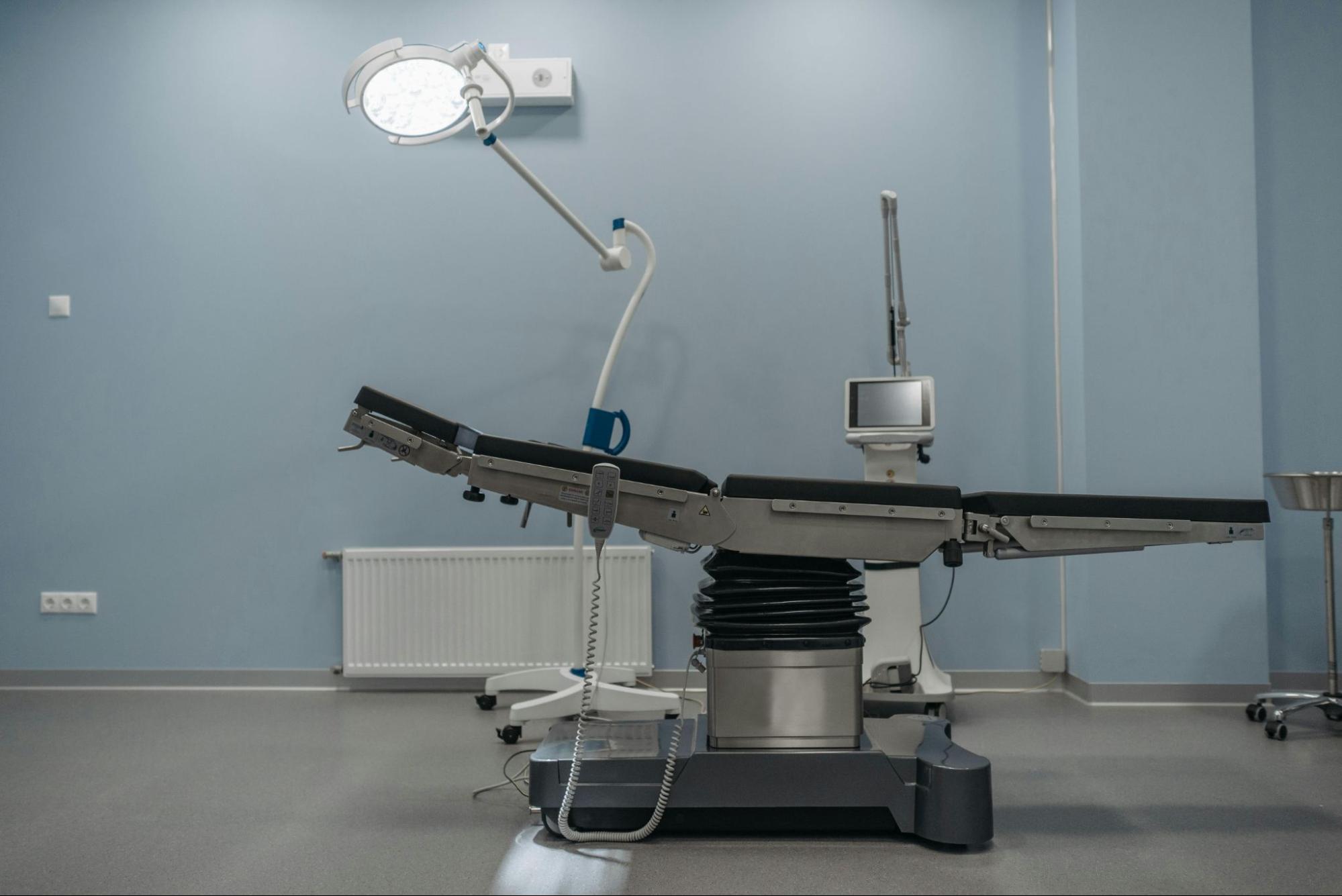
Hospitals and surgical environments need seamless, hygienic surfaces that resist aggressive disinfectants and stand up to constant rolling traffic from gurneys, IV stands, and equipment carts. Heat-welded homogeneous sheet vinyl with through-color construction is the standard. The through-pattern construction means abrasion doesn’t reveal a different colored substrate beneath. Budget roughly $6 to $14 per square foot installed, including heat welding.
Retail and Hospitality
High aesthetic demands meet heavy foot traffic. LVT with a 28 to 40 mil wear layer and a urethane surface treatment gives you wood and stone visuals that don’t telegraph wear at the high-traffic checkout zones and entrances. Glue-down installation is preferred for commercial. Floating floors can shift under heavy use.
Warehouses and Light Industrial
Warehouse floors face pallet jacks, forklifts, and concentrated static loads from racking. Most LVT and LVP products are not designed for this. Spec heavy-duty sheet vinyl or specialty commercial VCT rated for rolling loads per ASTM F2055, with wear layers in the 28 to 40 mil range. Static load resistance and indentation recovery matter more than visual design.
Schools and Educational Facilities
Schools need durable, easy-to-clean surfaces that survive thousands of footsteps, dropped lunch trays, and dragged furniture. VCT remains common because individual tiles can be replaced without ripping up the whole corridor, a budget advantage that matters in institutional facilities. Heavy-commercial LVT is gaining ground in newer construction where the lifecycle math favors lower maintenance over lower install cost. For a deeper look at the full set of considerations, see our guide on choosing the right flooring for schools.
Corporate Offices
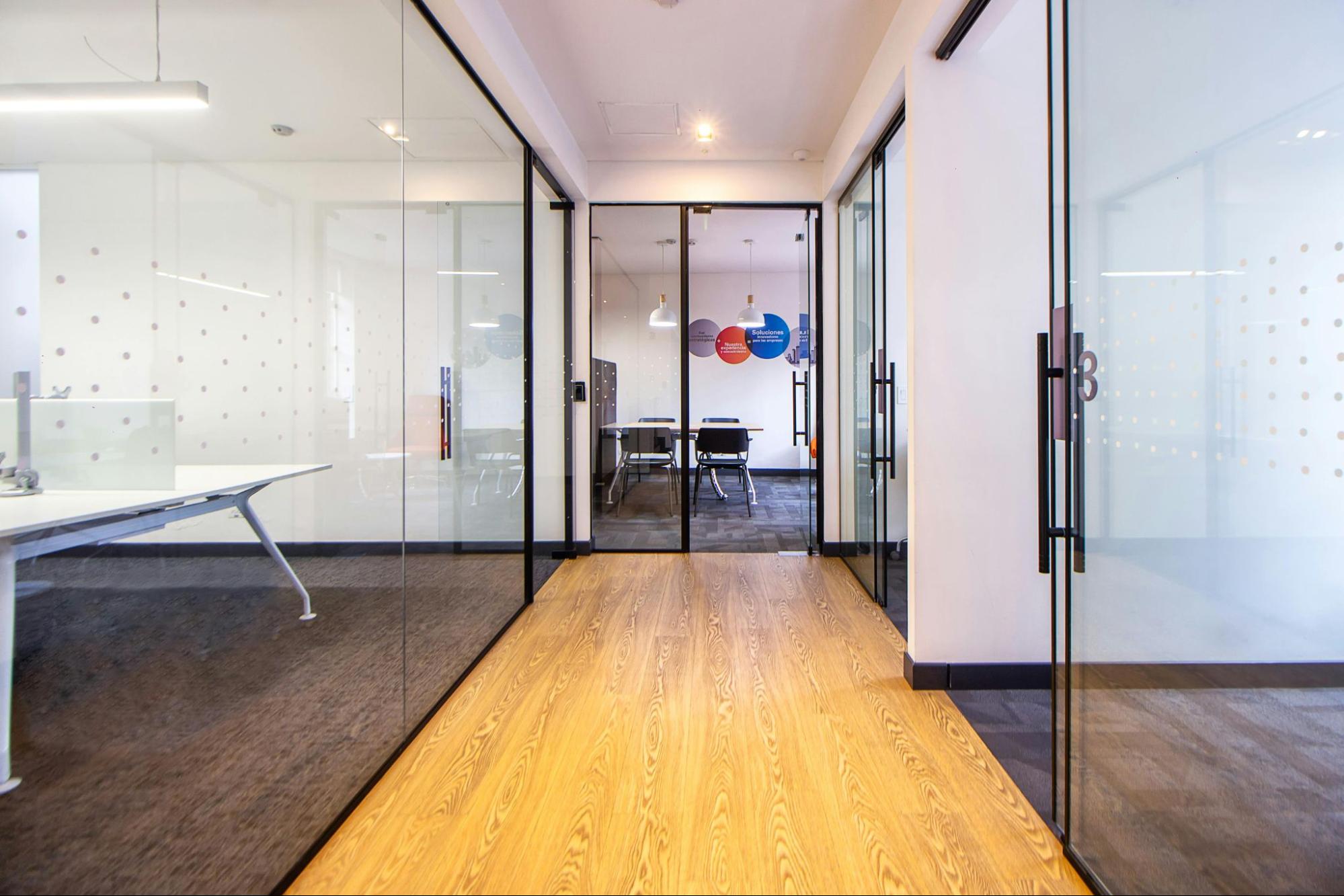
Office environments are usually moderate-traffic, but rolling chairs and high-heel traffic concentrate wear in specific spots. A 20 to 28 mil wear layer LVT or LVP, installed glue-down, hits the right balance of cost, performance, and design. Look for FloorScore certification if LEED compliance or indoor air quality is on the spec sheet.
Installation Method: Glue-Down vs. Floating
Almost all heavy-duty commercial vinyl flooring should be glue-down. Floating installations are faster and cheaper, but they shift under heavy rolling loads and concentrated traffic in ways that show up as gapping or telegraphing within a year.
Glue-down installation creates a unified surface that resists movement, handles temperature fluctuations better, and seals out moisture at the substrate level. For sheet vinyl, the only acceptable seam method in healthcare and aseptic applications is heat welding. Chemical welding is acceptable for lighter commercial work but not for spaces with infection-control requirements.
One important caveat on underlayment: if your LVT comes with an attached pad, adding another layer underneath can actually destabilize the floor. For when to use underlayment and when to skip it, see our guide on underlayment for LVT.
Certifications That Should Be on the Spec Sheet
Beyond the ASTM and EN ratings already covered, look for:
FloorScore: third-party certification that the product meets indoor air quality standards for VOC emissions. Often required for healthcare, education, and LEED-certified projects.
NSF/ANSI 332: sustainability assessment standard for resilient flooring, scored Conformant through Platinum.
California 01350 / CDPH compliance: required for many state and federal projects.
Reputable commercial vinyl manufacturers publish all of these on the product data sheet. If a spec sheet doesn’t list certifications, treat it as a red flag.
Brands That Build to Heavy-Duty Specifications
A handful of manufacturers consistently meet heavy-duty commercial specifications across their product lines. For the full Koffler brand directory across categories, see our roundup of the top flooring brands for commercial and residential projects.
- Armstrong Flooring: homogeneous sheet vinyl, LVT, and VCT with the Diamond 10 Technology surface treatment for the most demanding healthcare and high-traffic environments
- Mannington: Quantum Guard HP wear layer designed for heavy commercial spaces
- Johnsonite (Tarkett): broad commercial LVT and rubber lines with strong healthcare and education presence
- Shaw Floors: heavy-commercial LVP and LVT with strong design flexibility for hospitality and retail
- Roppe: full commercial rubber and vinyl line including Flexco products for healthcare, education, and government facilities
These are the brands that publish wear layer thickness, ASTM ratings, and certifications without making you dig. They’re also the brands whose products you’ll find behind the scenes in hospitals, airports, and Fortune 500 corporate campuses.
What This All Means for Your Project
If you’re specifying heavy-duty commercial vinyl flooring for a project, work in this order:
- Define the environment first. Healthcare, retail, warehouse, school, or office. Each has a different default format.
- Set the minimum wear layer. 28 mil for standard heavy commercial, 40 mil for the most demanding environments.
- Match the format. Sheet for hygienic and seamless, LVT or LVP for design-driven, VCT for budget institutional.
- Confirm certifications. FloorScore for indoor air quality, ASTM ratings for the traffic class.
- Insist on glue-down installation. Floating floors are not appropriate for heavy-duty commercial use.
When you get these five decisions right, the floor performs the way the manufacturer’s literature says it will. When you get them wrong, you replace the floor in three to five years instead of fifteen to twenty.
FAQ
What’s the difference between commercial-grade and heavy-duty commercial vinyl flooring?
Commercial-grade is a broad category that includes light commercial products suitable for small offices and low-traffic retail. Heavy-duty commercial flooring is specifically rated for high-traffic environments, typically with a 28+ mil wear layer, ASTM F1700 Class III or F1303 Type II rating, and either heat-welded seams or glue-down installation.
How thick should the wear layer be for a hospital or healthcare facility?
A minimum of 28 mil, with 40 mil preferred for corridors and high-traffic clinical areas. Heat-welded homogeneous sheet vinyl is the standard format because it eliminates seams where bacteria can grow.
Is luxury vinyl tile durable enough for a warehouse?
Generally, no. Warehouses with pallet jacks, forklifts, or heavy racking loads need flooring rated specifically for rolling and static loads per ASTM F2055. Heavy-duty sheet vinyl, specialty commercial VCT, or non-vinyl options like sealed concrete are typically better warehouse choices than LVT.
Can heavy-duty commercial vinyl flooring be installed over existing VCT or sheet vinyl?
Sometimes. The existing floor needs to be single-layer, fully adhered, well-bonded, level, and free of wax and contaminants. Most manufacturers prohibit installation over cushioned, floating, or multi-layer existing floors. Always follow the specific manufacturer’s substrate requirements.
How much does heavy-duty commercial vinyl flooring cost?
Installed costs typically range from $4 to $14 per square foot depending on format and environment. Standard heavy-commercial LVT runs $5 to $9 per square foot installed. Heat-welded sheet vinyl in healthcare runs $6 to $14 per square foot including welding labor.
Spec the Right Floor the First Time
Heavy-duty commercial vinyl flooring is a long-term investment. The right product, properly specified and installed, lasts fifteen to twenty years even in the most punishing environments. The wrong product fails in three.
Browse our full luxury vinyl tile collection for heavy-duty commercial-grade LVT, or talk to the Koffler Sales team for help matching the right spec to your project. We’ve been spec’ing commercial floor and wall protection products for over fifty years. We can help you avoid the expensive mistakes before they happen.