
 Posted by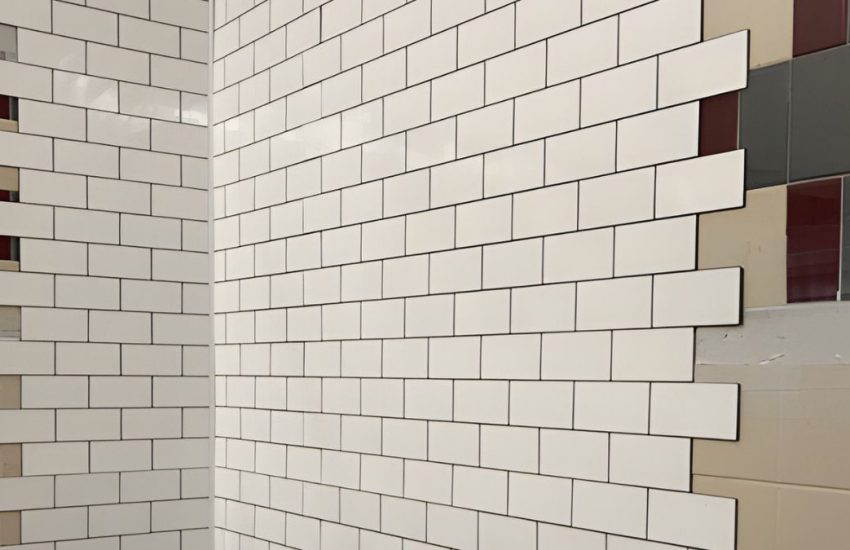
When it comes to achieving the clean, timeless subway tile look, you now have more than one option. Traditional subway tiles are made of ceramic or porcelain and installed one by one, but many designers and architects specify FRP (Fiberglass Reinforced Plastic) subway tile sheets to replicate the same appearance in a more practical form.
FRP sheets like the ones manufactured by Marlite provide a classic subway tile design in durable, lightweight panels that are faster to install and easier to maintain. That’s why they’ve become a popular solution in commercial spaces such as restaurants, retail stores, and other high-traffic interiors.
If you’re weighing the benefits of FRP sheets versus individual ceramic tiles, this guide breaks down the differences in installation, durability, costs, and design flexibility.
What Are FRP Subway Tile Sheets?
Marlite FRP subway tile sheets are large-format wall panels engineered from fiberglass reinforced plastic. They’re molded to replicate the appearance of ceramic subway tiles, complete with grout lines, but come in sheet form rather than as individual pieces.
Key advantages include:
- Lightweight and durable: FRP resists impact, moisture, and stains.
- Fast installation: Panels cover large wall areas quickly with consistent spacing.
Easy maintenance: Smooth, non-porous surfaces are simple to clean. - Commercial-grade: Designed for use in high-traffic and high-moisture environments.
These qualities make FRP subway tile sheets especially well-suited for projects where speed, uniformity, and long-term durability matter.
What Are Individual Subway Tiles?
Individual subway tiles are typically 3×6-inch ceramic or porcelain rectangles. Installed one by one, they allow complete control over spacing, alignment, and pattern. This traditional method delivers a handcrafted look and remains popular in residential kitchens, bathrooms, and custom designs.
Advantages of individual ceramic tiles include:
- Maximum design flexibility: Options for herringbone, stacked, vertical, or mixed patterns.
- Custom spacing: Grout width and layout are fully adjustable.
- Easy repairs: Single tiles can be replaced without disturbing larger areas.
While ceramic tiles offer unmatched design freedom, they require skilled labor and more time to achieve a polished finish.
Appearance and Finish
FRP subway tile sheets create an even, uniform finish because the grout lines are molded into the panels. This ensures consistency from one sheet to the next, with no variations in spacing or alignment. The result is a polished, professional look, especially useful in large areas where inconsistencies might otherwise be noticeable.
Ceramic tiles, on the other hand, allow for more customization in the appearance of grout lines and overall layout. Installers can adjust spacing to create different effects, and the flexibility in patterns makes it possible to design more unique, personalized spaces. However, the consistency of the finish depends heavily on the skill of the installer.
Installation
Installing FRP sheets is straightforward and efficient. Large sections can be adhered to the wall at once, reducing both the number of steps and the time required. Because the tile pattern is already part of the panel, there’s no need for spacers or grout between every individual piece.
The main focus is ensuring each sheet is properly aligned and securely bonded to the surface.
Ceramic tile installation is much more detailed. Each tile must be placed carefully with adhesive, leveled, and spaced correctly before moving on to the next. This process takes longer, and small errors can add up over large areas if not corrected. While more labor-intensive, this method provides flexibility in cutting tiles to fit corners and tight spaces with precision.
Durability and Maintenance
FRP sheets are designed for commercial performance. They stand up well against daily wear and tear, resisting impacts, moisture, and stains. The smooth surface is easy to wipe down, making them ideal for environments that require regular cleaning. Because they don’t rely on traditional grout, there’s no risk of grout discoloration over time.
Ceramic tiles are also durable, but they are more prone to cracking or chipping if struck. Grout lines between the tiles can stain or deteriorate, requiring ongoing maintenance such as sealing or scrubbing. While they can last for decades when cared for properly, ceramic installations demand more effort to keep looking their best compared to FRP panels.
Cost Considerations
On a material-only basis, ceramic subway tiles are usually less expensive than FRP sheets. However, because each tile must be set individually, installation costs are typically higher. The labor required for ceramic tile installation can quickly outweigh the savings in material costs, especially for larger spaces.
FRP sheets, while more expensive per square foot, reduce labor time dramatically. This often lowers total project costs when factoring in both materials and installation. Over time, FRP’s low maintenance requirements also add value, particularly in commercial projects where durability and ease of cleaning are priorities.
Design Flexibility
FRP subway tile sheets deliver a consistent, classic subway tile appearance, but design options are limited to what the manufacturer offers. They are best suited for projects where a uniform, traditional subway tile look is desired across a large surface.
Ceramic tiles allow for unlimited creativity. They can be arranged in custom layouts, combined with other tile types, or spaced to achieve different design effects. For projects where personalization and unique patterns are key, ceramic tiles remain the more versatile option.
Pros and Cons Summary
| FRP Subway Tile Sheets | Individual Ceramic Tiles | |
| Material | Fiberglass Reinforced Plastic | Ceramic or porcelain |
| Installation | Fast, sheet-based | Slower, tile-by-tile |
| Durability | High impact resistance, easy care | Strong but can chip/crack |
| Cost | Higher material, lower labor | Lower material, higher labor |
| Design Flexibility | Limited to subway tile look | Unlimited patterns/layouts |
| Repairs | Replace sections | Replace individual tiles |
| Best For | Commercial, high-traffic spaces | Custom residential projects |
When to Choose Each Option
Choose FRP Subway Tile Sheets if:
- You’re covering large areas quickly.
- The project is commercial or high-traffic.
- You want low maintenance and high durability.
- Professional labor costs are a concern.
Choose Individual Ceramic Tiles if:
- You’re creating a custom design or pattern.
- The project is residential and appearance is highly personalized.
- You’re comfortable with a longer installation timeline.
- Repair flexibility is important.
Shop FRP Subway Tile Sheets at Koffler Sales
Koffler Sales is the premier retailer of FRP subway tile sheets, trusted by designers, subcontractors, and construction companies nationwide. Our products have been installed in national chains such as Einstein Bagels, Walmart, and other large retailers, making us the go-to source for durable, reliable, and specification-ready FRP sheets.
Frequently Asked Questions
Are FRP subway tile sheets real tile?
No. FRP subway tile sheets are panels made from fiberglass reinforced plastic, molded to look like subway tiles. They replicate the appearance but not the material of ceramic.
Can FRP sheets and ceramic tiles be combined in one project?
Yes, though they’re usually used separately. FRP is typically specified for commercial applications, while ceramic tiles are more common in residential design.
Which is easier for first-time installers?
FRP subway tile sheets are faster and more forgiving because they come pre-formed. Ceramic tiles require more precision and experience.
Do FRP sheets require grout?
No, the grout lines are molded into the sheets, eliminating the need for traditional grout installation and upkeep.