
 Posted by
Size is more than a finishing choice. It drives how the base protects the wall. It also drives how the room reads. Outfitting a busy property or refreshing a home? The standard dimensions get you to a clean result. Each material carries its own range. That covers vinyl, rubber, MDF, and wood.
Key Takeaways
- Standard wall base dimensions typically range from 2.5” to 6” in height, with thicknesses between ⅛” to ⅜”.
- Vinyl and rubber suit commercial use. Wood and MDF suit homes.
- Room size, ceiling height, and style all steer the size.
Standard Wall Base Dimensions
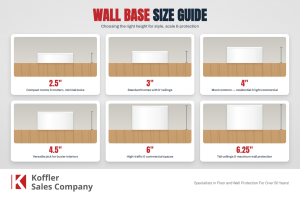
The wall base covers the joint between the wall and floor. It gives that joint a clean edge. Sizes shift by application. Most fall in a tight band. Heights run 2.5 to 6 inches. Thickness runs 1/8 to 3/8 inch. For residential and light commercial use, 4 inch is the common call. In busier spaces, 6 inches adds impact protection. Before you install, review the common installation mistakes to avoid.
Standard Sizes Wall Base by Material
Each material carries its own sizing rules. Performance and typical use set them.
| Material | Standard heights | Standard thickness |
|---|---|---|
| Vinyl | 2.5, 4, 4.5, 6 inch | 1/8 to 1/4 inch |
| Rubber | 2.5, 4, 4.5, 6 inch | 1/8 to 3/8 inch |
| Wood | 3.25, 4.25, 5.25, 6.5 inch | 5/8 to 3/4 inch |
| MDF | 3.25, 4.25, 5.25 inch | 1/2 to 5/8 inch |
Vinyl
Vinyl base is durable and flexible. It installs fast. That fits offices, retail, and schools. It runs 2.5, 4, 4.5, and 6 inches. Thickness runs 1/8 to 1/4 inch.
Rubber
Rubber steps up the impact resistance. It suits schools, hospitals, and plants. It runs the same heights. Thickness runs 1/8 to 3/8 inch. That is the heaviest gauge of the common materials.
Wood
Wood base is a residential staple. It offers a wide profile range. It comes 3.25, 4.25, 5.25, and 6.5 inches. Thickness runs 5/8 to 3/4 inch.
Medium-Density Fiberboard (MDF)
MDF is the value pick next to wood. It gives clean lines and steady sizing. It comes 3.25, 4.25, and 5.25 inches. Thickness runs 1/2 to 5/8 inch.
Matching Wall Base Size to Your Design Goals
Size is a visual element. It is more than coverage. It should feel proportional to the room.
Small Rooms or Lower Ceilings
Keep heights in the 3.25 to 4 inch range. That keeps the space open.
Large Rooms or Higher Ceilings
Go taller, 5.25 to 6.5 inches. A tall base grounds the room.
Modern Aesthetics
Choose a shorter base with a clean profile, 2.5 to 4 inches. It suits modern interiors. For the full decision, see the guide to matching base to your flooring type.
Commercial Versus Residential Sizing
Commercial Applications
Durability leads here. Commercial spaces want thicker, heavier bases. Vinyl and rubber fit best. Heights of 4 or 6 inches are standard. They resist scuffs and meet hygiene codes.
Residential Applications
Style leads here. Wood and MDF are typical. Room layout and ceiling height set the size. Heights often run 3.25 to 6.5 inches. To weigh long-term value, see the guide to cost and labor planning for commercial installs.
Why the Right Size Wall Base Matters
The right size balances function and form. It shields the wall. It hides construction gaps. It gives a clean floor-to-wall line. A 6 inch rubber base suits a school hallway. It takes cart and foot traffic. It holds a sanitary line. A 4.25 inch MDF base suits a home office. It finishes the room at the right scale. Good sizing also clears outlets and cabinets. Plus it makes cleaning easier.
How to Size Base the Right Way
- Weigh durability and upkeep, not just looks.
- Keep sizing consistent across rooms. Split by floor or function when you mix.
- Factor in ceiling height. A shorter base suits an 8 foot room.
- Prep the wall first. Good prep keeps the base flat and tight.
Final Tips for Choosing the Right Size
The best size balances design, room scale, and practicality. When in doubt, use mockups. Test samples. Factor in upkeep and nearby elements. Still learning the fundamentals? Start with the basics of base trim.
Shop This Guide
Ready to buy? These products fit the guidance above.



Frequently Asked Questions
What is the most common baseboard height for homes?
Most residential bases run 3.25 to 5.25 inches. 4.25 inches is a popular pick. It suits standard 8 foot ceilings.
Can I mix base sizes in one building?
Yes, with a plan. Consistency keeps the look clean. Split sizes by floor or by function.
Is a thicker wall base better?
A thicker base takes more impact, which matters most in commercial spaces. At home, thickness is mostly about style.
What thickness does each material come in?
Vinyl runs ⅛ to ¼ inch. Rubber runs ⅛ to ⅜ inch. MDF runs ½ to ⅝ inch. Wood runs ⅝ to ¾ inch. Rubber is the heaviest resilient gauge.
What height works with a 6 inch commercial spec?
A six inch vinyl or rubber base is standard. It suits high-traffic areas. It adds protection and meets hygiene codes.
How do I keep a wall base from hitting outlets or cabinets?
Check outlet and cabinet heights first. Then pick your height. The base sits clean with room to spare.
See every kind of wall base on our main shopping page. Or contact our team for bulk pricing.